

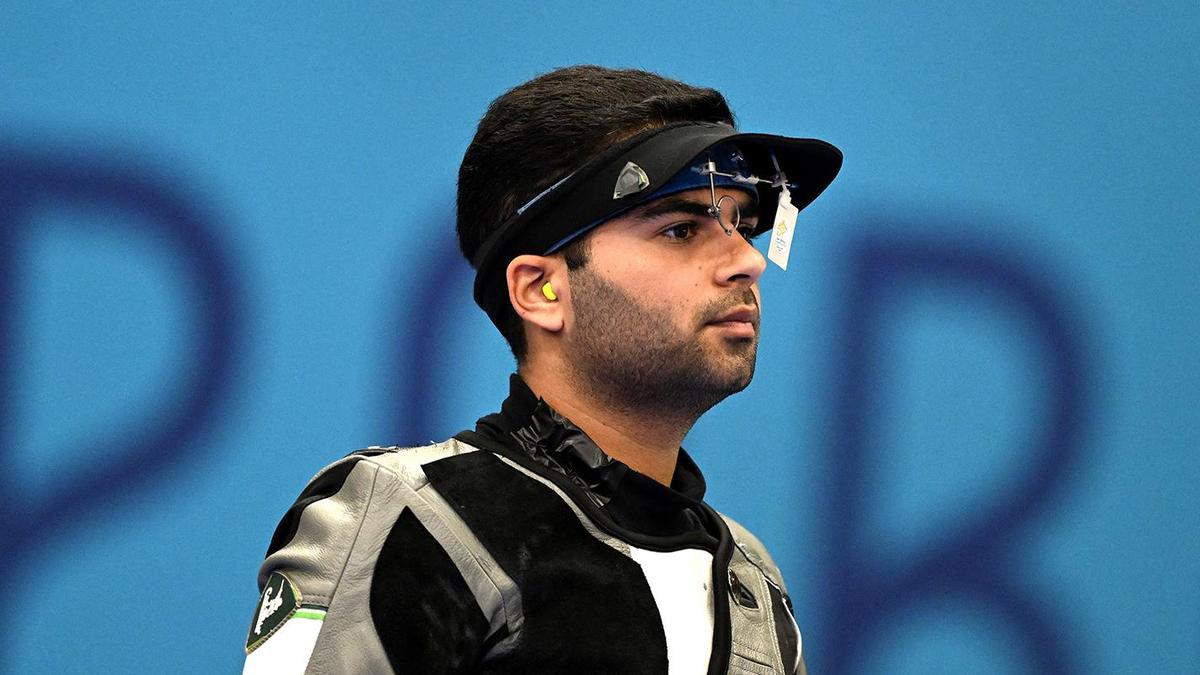
With less ‘support’, rifle shooters look to stay on target at Asian Championships
A day before the Asian Rifle and Pistol Shooting championships gets underway in New Delhi’s Karni Singh shooting range on Wednesday, India’s top rifle shooter Arjun Babuta had a single concern on his mind. It’s not to do with his preparation or prospects – with three gold medals already to his name at the continental championships and a relatively diminished field in the absence of heavyweights China – he’s already one of the favourites in the men’s 10m air rifle competition.
What Babuta’s worried about, is whether his equipment and in particular his clothing gear is cleared at the equipment control room where officials will test his jacket and trousers to see if the material is within the specified stiffness standard.
The Asian Championships is the first international competition in which the ISSF (international shooting federation) has introduced new rules which limits the stiffness of the jacket and trousers, in some cases to a quarter of the previous permitted levels. Should a shooter’s kit not meet the reduced stiffness standards, they won’t be allowed to compete.
Inevitable change
In some ways the rule change was inevitable. Maintaining the stance in rifle shooting requires incredible balance and stability and stiffer clothing has aided this. However, in recent years, kit manufacturers have been producing increasingly stiffer apparel, leading to increasingly high scores. This in turn has caused some to question whether shooters were relying more on their gear for their performances.
READ | Bangladesh to send lone shooter to Asian Championships; Pakistan, China skip entries
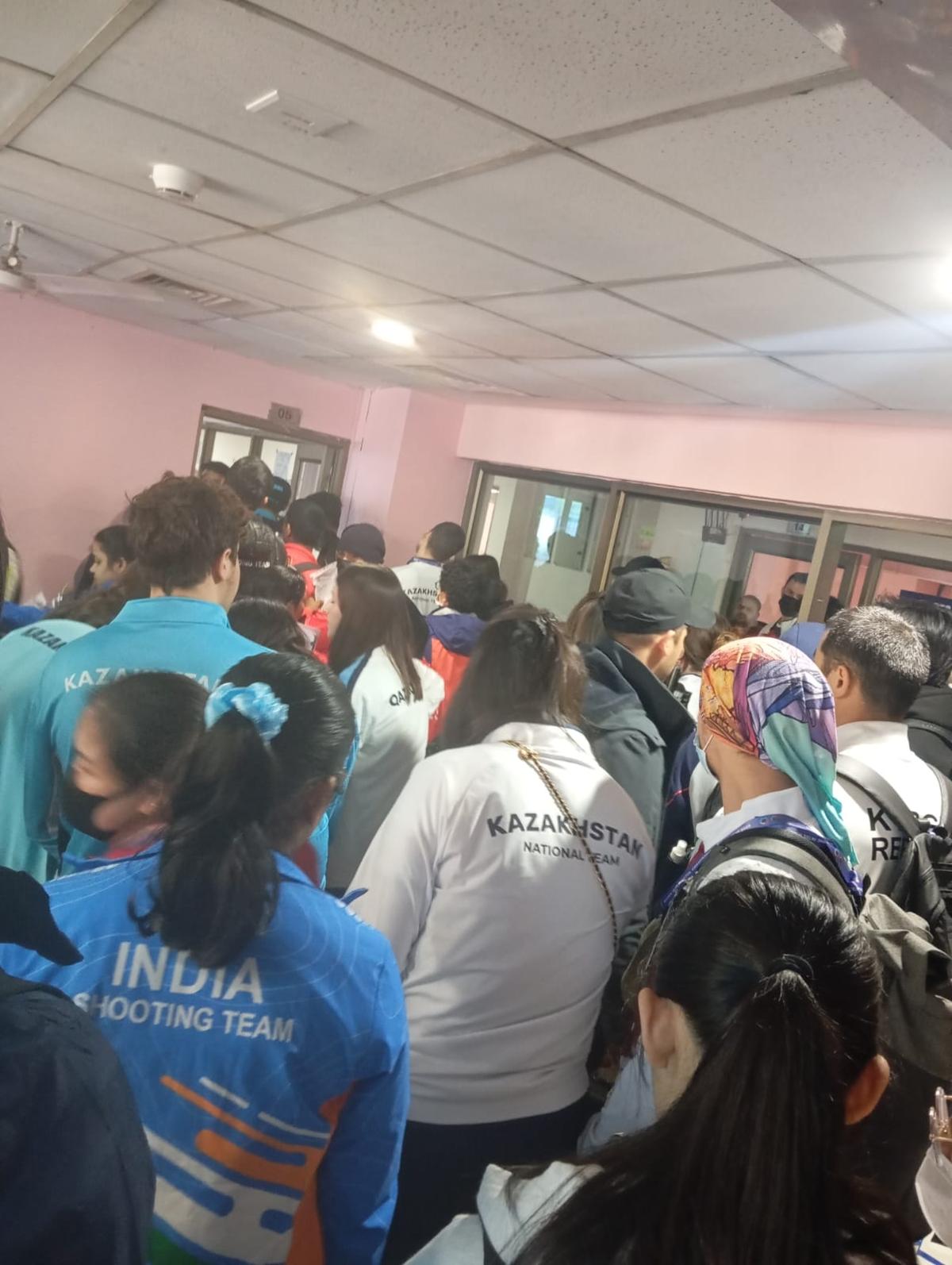
Athletes waiting outside the equipment control roomto get their gear cleared.
| Photo Credit:
Jonathan Selvaraj

Athletes waiting outside the equipment control roomto get their gear cleared.
| Photo Credit:
Jonathan Selvaraj
According to the new ISSF equipment rules issued at the start of the year, each of the panels of the jacket (which consists of six panels in total) needs to be under 2.5mm thick. The upper area of the jacket must pass the stiffness test when measured with the official stiffness-testing device and achieve a deflection of 3mm within a maximum time of thirty (30) seconds. This used to be 60 seconds as per the old rules.
The jacket below the lowest point of the shoulder blades, plus the sleeves, (single thickness), must pass the same test within 15 seconds. This too used to be 60 seconds as per the old rules. There are similar limitations on trousers too. The maximum thickness is 2.5mm and the region of trousers above the crotch must achieve a deflection of 3mm within a maximum time of 30 seconds. The material of both legs below the level of the crotch must pass the same test within fifteen seconds. Under the old rules, these parts of the trousers needed to achieve the 3mm deflection within 60 seconds.
The new rules will take some adjusting to. At the equipment control room at the Karni Singh Range on Tuesday morning, a number of contingents complained that their jackets were not meeting the stiffness standards. This, however, wasn’t an issue with their jackets in themselves but rather due to the cold weather. Through some trial and error, this matter was corrected.
“Like any fabric, the canvas in jackets and trousers tend to tighten up when it gets cold. In this situation, you need to simply heat the jacket or keep it in the sun and the material will soften,” explains India’s Adriyan Karmakar who will be competing in the men’s 50m three position event.
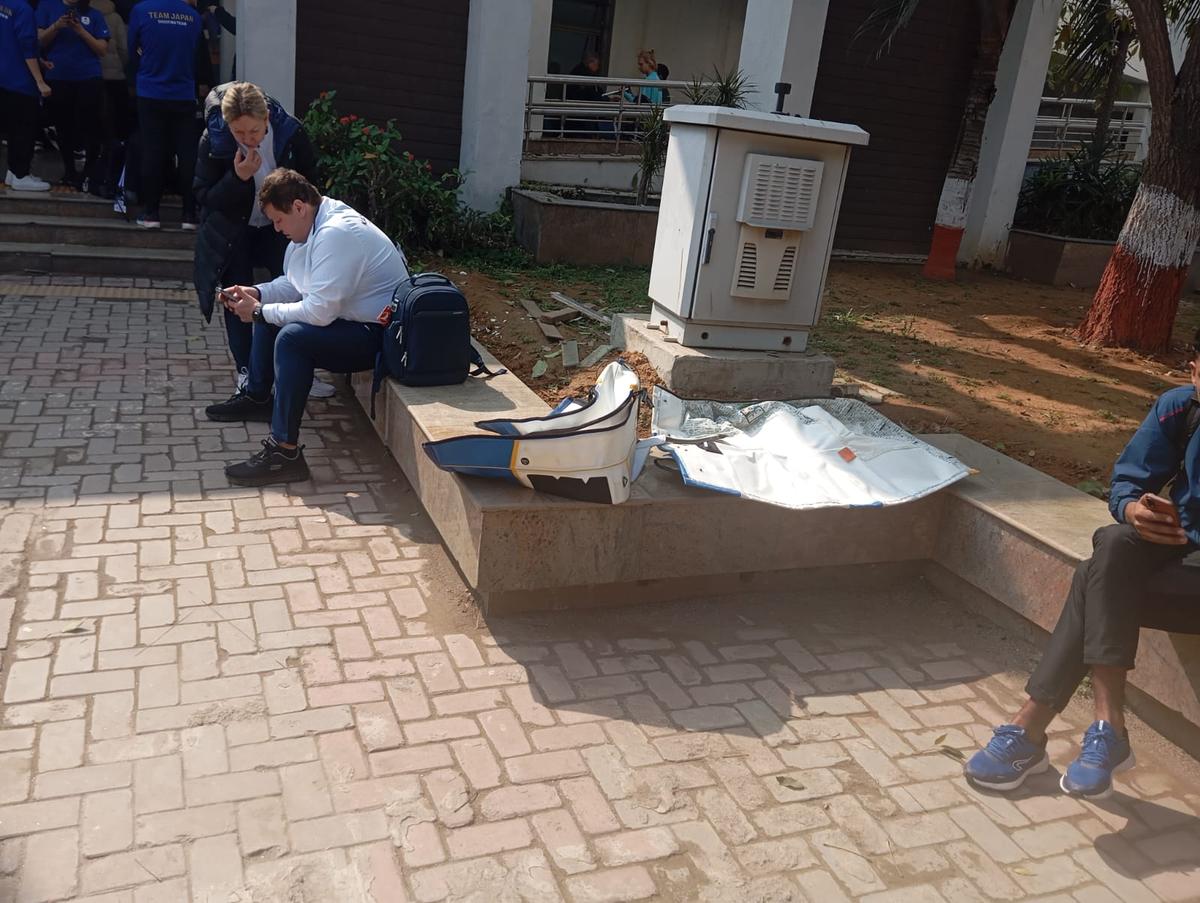
Jackets being left outside the venue to let it soften under the sun.
| Photo Credit:
Jonathan Selvaraj
Jackets being left outside the venue to let it soften under the sun.
| Photo Credit:
Jonathan Selvaraj
Karmakar had an idea of how to adjust the stiffness of jackets because while the Asian Championships is the first international competition with the new rules in place, Indian shooters already have some experience with the new regulations. At last month’s selection trials to decide India’s shooting contingent for the first two World Cups of the year, the National Rifle Association of India (NRAI) had already introduced the stricture on reduced stiffness.
Jerry rigged measures
Indeed, over the past few months India’s shooters have been trying various methods to reduce the stiffness of their kit. “I’ve heard kit manufacturers are in the process of making jackets with reduced stiffness but it’s still a work in progress. So over the past few months I’ve been making some adjustments to the kit that we were already using. I’ve been making cuts to the area with the thickest amount of canvas,” says Babuta. “After that I took a hammer and beat it flat and then kept it in the sauna. If you use steam or heat the jacket gets softer,” he says.
READ | Asian Championship Rifle/Pistol live streaming: Where to watch the continental shooting competition?
Babuta says he had to be careful since he didn’t want the kit to be softer than it needed to be. “I took my time. We have a stiffness gauge at the range and so we made some changes and then tried to see if it would pass the fitness parameters. So I would keep it in the sauna, then wait for a while and see if it passed. The entire process took about 15 days. There was a lot of trial and error. It was the help of my colleagues and coaches that helped me,” he says.
These early impromptu adjustments aren’t always the most visually appealing. “If you were there at the shooting trials, you would see that Swapnil Kusale’s (Olympic 50m three positions bronze medal winner) trouser was cut so deeply that when he stood it almost looked like a Chinese lantern,” laughs National coach Deepali Deshpande.
While the regulations change has got a lot of athletes worked up, it’s not had nearly the kind of moderating effect on scores as the ISSF would have hoped for, if the Indian shooting trials are any example. Babuta shot scores of 635.1 and 633 in his two trials while compatriots Shahu Manu shot an eye-watering 637.1 in his second trial.
For Babuta, whose equipment was cleared without much headache on Tuesday, the ease at which he adapted to the new rule change came as a surprise to him. “Initially I was thinking thoda change toh hoga hi (there would be some change in scores) but once I started shooting with the new rules, it didn’t make that much difference.
“For me the reduced stiffness didn’t make that much of a difference because I’ve already been doing a few exercises where I train without any kit support. So even when I wear any kit it feels like I’ve gained a lot of stability immediately. Maybe this will have an effect on those who are using the kit as a psychological support but most top shooters I know adapted and maybe that’s why our performance has remained consistent,” he says.
Published on Feb 03, 2026