

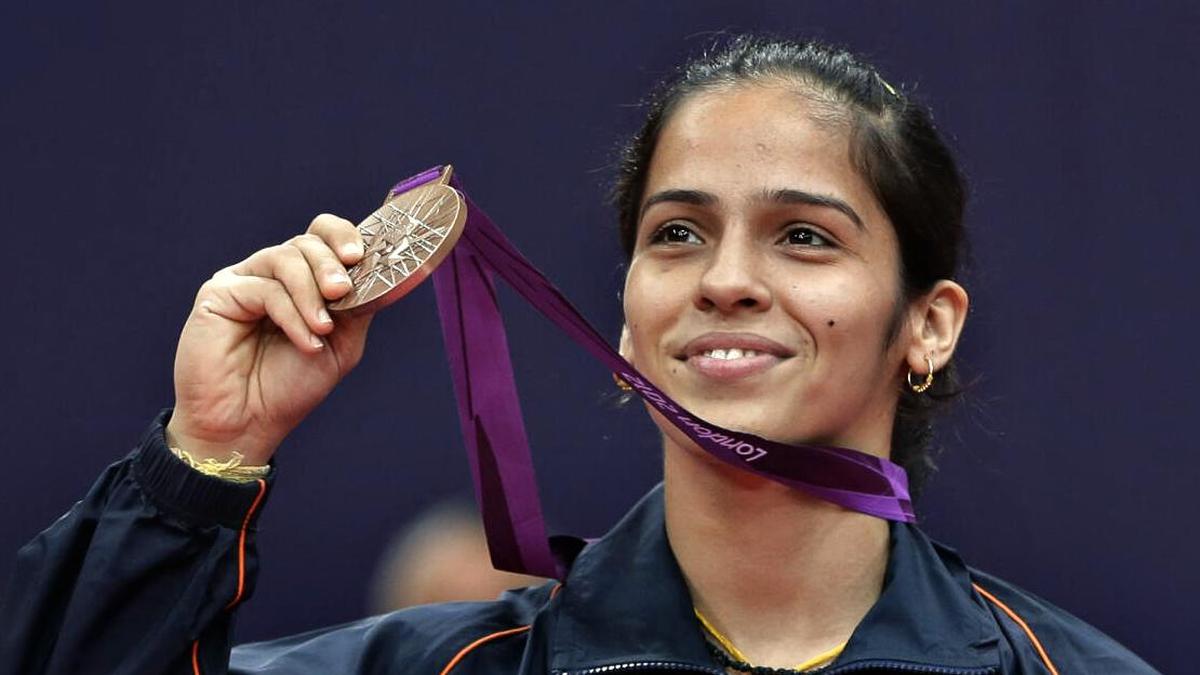
Saina Nehwal: This generation is a lot smarter than we were, but at the same time, I feel they are a lot softer than we were
While she might have last played a competitive match in 2023 (at the Singapore Open), Saina Nehwal’s never officially called time on her international career. Speaking to Sportstar on the sidelines of the Legends Vision Legacy Tour, Saina addresses why she never felt the need to announce her retirement, the challenge of being a pioneer in Indian women’s badminton, what she feels her legacy is, and what she thinks the future holds for Indian women’s singles.
You never officially announced your retirement. Why is that?
I never saw the point in doing this. When I entered badminton, I didn’t make any big announcement either. It’s the same thing when you leave. Sometimes I’ll have dreams that I might come back. It’s been six months since I took cortisone injections in my knees. Then I’ll remember just how badly they are damaged. I already have arthritis in them. The doctor told me that if it had just been an ACL injury, it could have been repaired, but this is cartilage degeneration that has built up over many years. Your body is just giving up. The cartilage is almost gone. So the joints are rubbing against each other, which is causing inflammation.
It’s not that I don’t want to play, but the option is not there. The body is a machine, and once the machine stops working, there’s only so much you can do to keep getting it ready.
What does life after badminton look like?
It’s challenging. You are looking for things to do. I do a lot of events and motivational talks. Right now, I’m part of the Legends Vision Legacy Tour, where we collect old badminton racquets and give them to underprivileged children to get them into the sport. I was a judge at the Miss Universe Pageant, which was pretty exciting as well. Coaching is always an option in the future. The good thing is that you have gone through so much stress and pressure for so many years, so you are looking to enjoy being a normal person for some time.
At the same time, I had been playing internationally since I was 13 or 14. Back then, I wanted to play forever. As a sportsperson, happiness for me came from winning.
That cycle of winning and losing is what motivated you to go through the same drill every day. It was a very simple, regimented life. I knew what time I had to sleep, what I had to eat, and what I shouldn’t do on a Sunday. It seems restrictive, but I started liking it, especially when you stand on a podium with a medal.
But while your mind wants to do it forever, your body doesn’t let you. You get slower. If you want to play at the highest level, your body needs to be able to handle 9–10 hours of training. But that was not possible for me. My knees started giving up, and I had to walk away before it got even worse.
Since the time I was nine, I’ve been playing until I was 34. Even now, there are a few days when I think I have to go to train and then I realise that I don’t need to do that anymore. Now I think, come on, live your life. So I’ll eat something unhealthy. But even these days, that old guilt will come in when I do that, and I’ll feel bad for a while.
Do you miss the training?
Just because I’m no longer playing doesn’t mean I can stop training. The only thing is that I’m not preparing for a tournament. I’m just putting in the work so I can be pain-free now! If I don’t train, my body will be in even more pain than it is!
How easy was it to switch off from competitive badminton?
I always thought that I wouldn’t be able to switch off the mentality of being an athlete, but it happened. In the first year, it felt strange, but after the second and third years, it started feeling normal. When you aren’t playing competitively, how long will that fire last? I was surprised when it happened to me as well. I talked to (Parupalli) Kashyap, and he told me, ‘Yeah, that fire will go away. ’ My parents told me the same thing. I didn’t believe it was going to be possible. It might have been true for other people, but it wasn’t for me.
But that’s exactly how it was. After two years away from the sport, I’m okay.
Sometimes the past almost feels like a dream. The years went by so fast! When I see my matches, it almost feels like someone else was playing those matches. I see myself and think, ‘That can’t be me!’
Do you think other players go through the same thing?
I think it’s different for everyone. I was playing at the very highest level, and my life was pretty sorted. I was being called for events, was taken care of and had enough money to be comfortable. When I was playing, I didn’t think so much about what was going to happen in the future. I was thinking about how I could improve as a player and what I had to achieve. Life was actually busy around that. I never thought about what would happen if I stopped tomorrow.
But these days I’m seeing a lot of struggle among players who didn’t make it to that highest level. Not all of them have jobs. So I can’t tell players anymore that you just play and everything will fall into place. If you look at cricket, they have made a system where, if you are in the top 50, you really don’t have to worry about finances. I think from 2021/2022 onwards, we saw a lot of badminton players who started realising that they couldn’t just focus on their badminton. I saw a lot of them starting to put less focus on their badminton and focus on their studies. I also see that a lot of players, once they retire, start to go abroad as coaches. When Sai (Praneeth) went last year to the USA, he was making maybe seven or eight times more than what he would have made in India. I can’t blame players. You have to do what makes sense to you.
Do you ever look back at matches and think I could have done this or won that?
Those wishes are never-ending. Sometimes I might think of the 2012 Olympic semis or when I was leading Carolina Marin during the opening game of the 2015 World Championships final. But I also look back and think I won 11 Super Series titles, a bronze medal at London, a bronze medal at the Asian Games, two World Championship medals, I was world number one, and a two-time gold medallist at the Commonwealth Games. Then it doesn’t feel so bad.
It gets easier and easier to forget the difficult results. The only time I’ll think about the All England loss to Marin is when someone asks me about it. And it will stay in my head for an hour. But I’ll still get to sleep that night. Others have it worse. I was just dominating a single All England match. Imagine what Lee Chong Wei, with three Olympic silver medals, must go through. He won 46 Super Series titles, but never won a single major world title. He lost matches to Lin Dan even when he held the match point. I once asked him, ‘Lee, do you get sleep at night when you think of all the silver medals?’ And he said, ‘I have three kids now. Life goes on, and you stop thinking about these things.’
At what point in your career did you realise that things were going to be different after this particular injury?
I think the injury that changed things for me was the bone spurs I developed just before the Rio Olympics. I think my career was never the same after that. Ideally, if I had a trainer when I was starting out, I might have done a lot of things to prevent it. They might have told me that my hips, shin bones, ankles and lower back all needed to be strong. If I had done these things from time to time, this extra bone growth wouldn’t have come.
It came because I pushed myself so hard. When you are playing extra on the court, you get a lot of osteophytes in your body. But that came as a surprise to me. I’d had injuries before, but these were things that I was able to recover from in a week or two at most.
So when the bone growths started developing, and the pain began, I thought I would push through it. I used to think I was blessed because I never picked up any major injuries like knee and ankle twists, which are very common in badminton. I thought I couldn’t get hurt. But then, when I had that bone growth diagnosed a week before the Olympics, I didn’t want to believe it was as bad as it was because I was in really good form. As a player, we just want to do well, and I’d done so well the previous year when I won a silver at the World Championships. I made a lot of finals and semis. I’d won the Australian Open just a month before. I was the second-seeded player at the Olympics. I was sure I would do better than the last time when I won bronze.
The doctor told me to take 3-4 days’ rest and then assess it. But I had to travel to Rio as well. I took cortisone injections to lower the pain, and we taped the knee up tightly, but I knew in practice itself that there was something very wrong with my knee. I was constantly thinking about the pain. I don’t even know how I played the two matches that I did.
I got my first surgery when I returned from the Olympics. I did win tournaments after I recovered from the surgery – the Malaysia Open, Denmark Open finals, the Indonesia Open and an Asian Games bronze – but I knew that I was not going to be the same as before.

Saina Nehwal and P.V. Sindhu, the twin pillars of India’s women’s singles rise.
| Photo Credit:
PTI

Saina Nehwal and P.V. Sindhu, the twin pillars of India’s women’s singles rise.
| Photo Credit:
PTI
Later, P.V. Sindhu followed you, but you were the first woman to do all that.
Being the first one to do all that was very hard. If we had had a World Champion before me, it would have been a little bit easier. A lot of the building blocks for Indian badminton weren’t in place when I started. These days, players get physios and strength and conditioning experts when they are nine. I got them for the first time when I was 18. If all these things had been pre-planned, there would have been even better results.
Sindhu is also not in the peak days of her career anymore.
I think even with Sindhu, we just take it for granted that she will always be there. She’s about 30. 30–31 is still a good age to play. If you are continuing to push after that, you need to have really good trainers and physios. I think she can still play and push herself.
What is the perspective you think people don’t really have about your career?
It’s not just me, but Sindhu as well. I think what people will realise, after my career and eventually Sindhu’s, is the value of what we achieved. People would just think that these results are coming, but they should realise that this wasn’t easy. You need to have a combination of a tough body, dedication, strength and power. You need to have the package of all of that to get results.
We were winning the Super Series every year, and it was taken for granted that we would win them.
Sometimes a player might have the right strokes, but the body doesn’t have that kind of power. Sometimes the power is there, but the strokes are not. There are very few players now who have that complete package. But that’s not just true in India. I think Malaysia had an all-round player like Lee Chong Wei, but I don’t think anyone has come to that level after him. It’s the same thing for China after Lin Dan. Among the men, they at least have Shi Yuqi, but among the women, they are a bit up and down.
You had a Sachin (Tendulkar) in cricket, and after that, you had a Virat (Kohli) and a Rohit (Sharma). But in my case, there wasn’t any example. I remember the first time I talked about winning an Olympic medal, and my mother laughed. She said, ‘She is talking about the Olympics when at every tournament it’s China who is winning’. You had to be exceptional, I think, then. At first, I didn’t believe I could be like one of those Chinese girls, but when I started winning, I began to think that maybe there was something exceptional in me.
In a way, I think the system wasn’t ready for someone like me. I was lucky I got a lot of sponsors early in my career, but I didn’t have a proper physio until I was 18. Today’s kids have a lot more knowledge than me. It was only after I won the Olympic medal that I got to understand how important nutrition is. Sometimes I think it’s a miracle that I even reached where I did with so little knowledge.
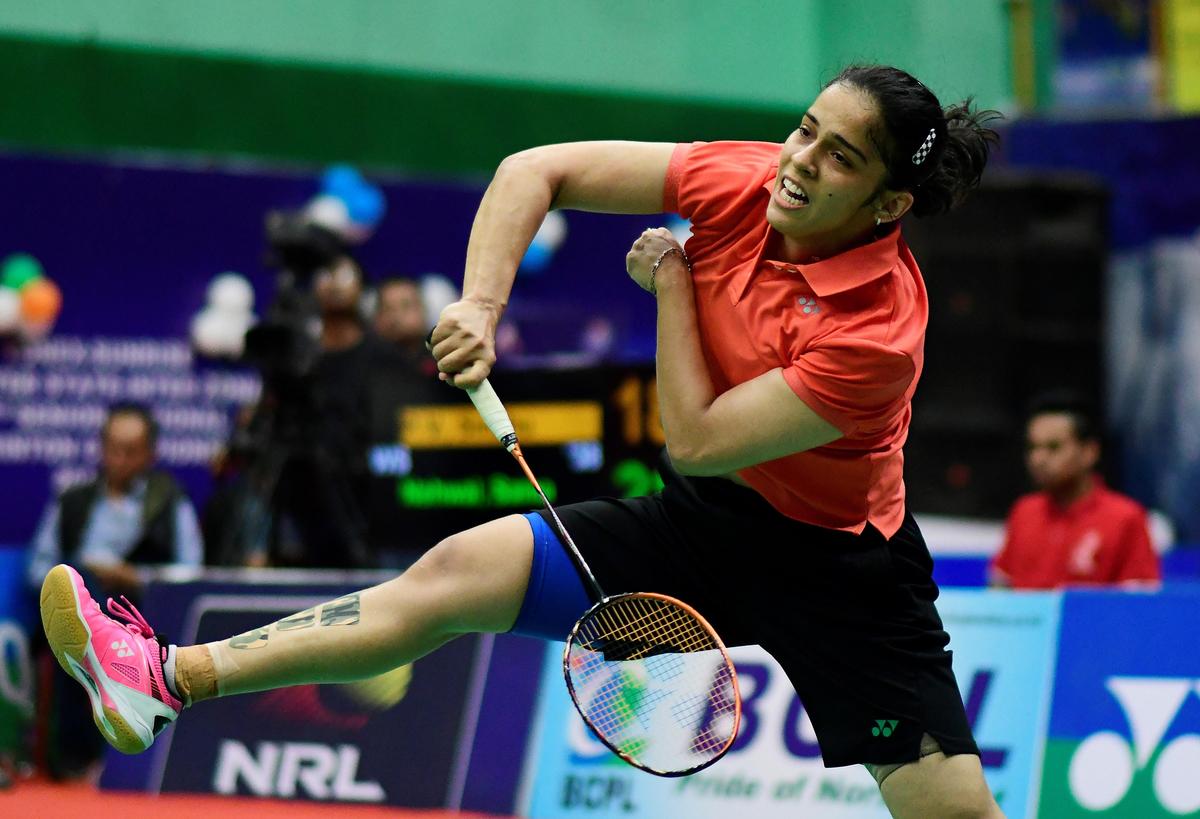
On April 2, 2015, Saina Nehwal scripted history by becoming the first Indian female badminton player — and just the second overall after Prakash Padukone in 1980 — to be ranked World No. 1.
| Photo Credit:
RITU RAJ KONWAR
On April 2, 2015, Saina Nehwal scripted history by becoming the first Indian female badminton player — and just the second overall after Prakash Padukone in 1980 — to be ranked World No. 1.
| Photo Credit:
RITU RAJ KONWAR
Why do you think we aren’t getting the results, especially in women’s singles?
I think about this as well. Maybe it’s just part of that up-down cycle. I can’t say that today’s girls are not good, but something is missing. There’s one argument that maybe they need more time to develop, but I think you should be playing at the elite level by the time you are 18. I played the Olympics by then. You should at least start seeing results by then and be competitive at the world level, even if you aren’t winning all the matches.
How much of this do you think comes from the fact that these girls are all training separately?
I’ve worked in multiple academies. I think about 70 per cent of a player’s ability is innate and about 30 per cent is what a coach can do. Gopi (Pullela Gopichand) sir got me to an excellent level, but it got harder for him to coach me when there were 30–40 other players to look after. With Vimal (Kumar) sir at the Prakash Padukone academy, I think I improved my speed. I was always a very good rally player and a hard hitter, but with Vimal sir, my movements got faster.
But at the same time, the quality of any academy depends on the kind of players who train there. And both Gopi’s academy and the Padukone academy were lucky because they had a lot of very good players. Now, with the National Centre in Guwahati, you will see good players coming from there in the future. I think the important thing is to ensure you have enough sparring partners. If that is the case, you don’t need everyone to train in the same place.
What do you think is keeping us from producing another elite women’s singles player?
I definitely think we have it in us to produce another very good women’s singles player. I think one thing going for my generation is that our coaches were a lot stricter with us. This generation is a lot smarter than we were, but at the same time, I feel they are a lot softer than we were. It’s not easy to scold them because they take things to heart a lot faster.
But for us, we took the coach’s word as law. Whatever he or our parents said was right. We would follow it even if it hurt a little. We would push ourselves a little more because of that mentality. Obviously, if you hurt something, have a really bad day, or get seriously injured, then that is different. But if you can push yourself, then you need to do that.
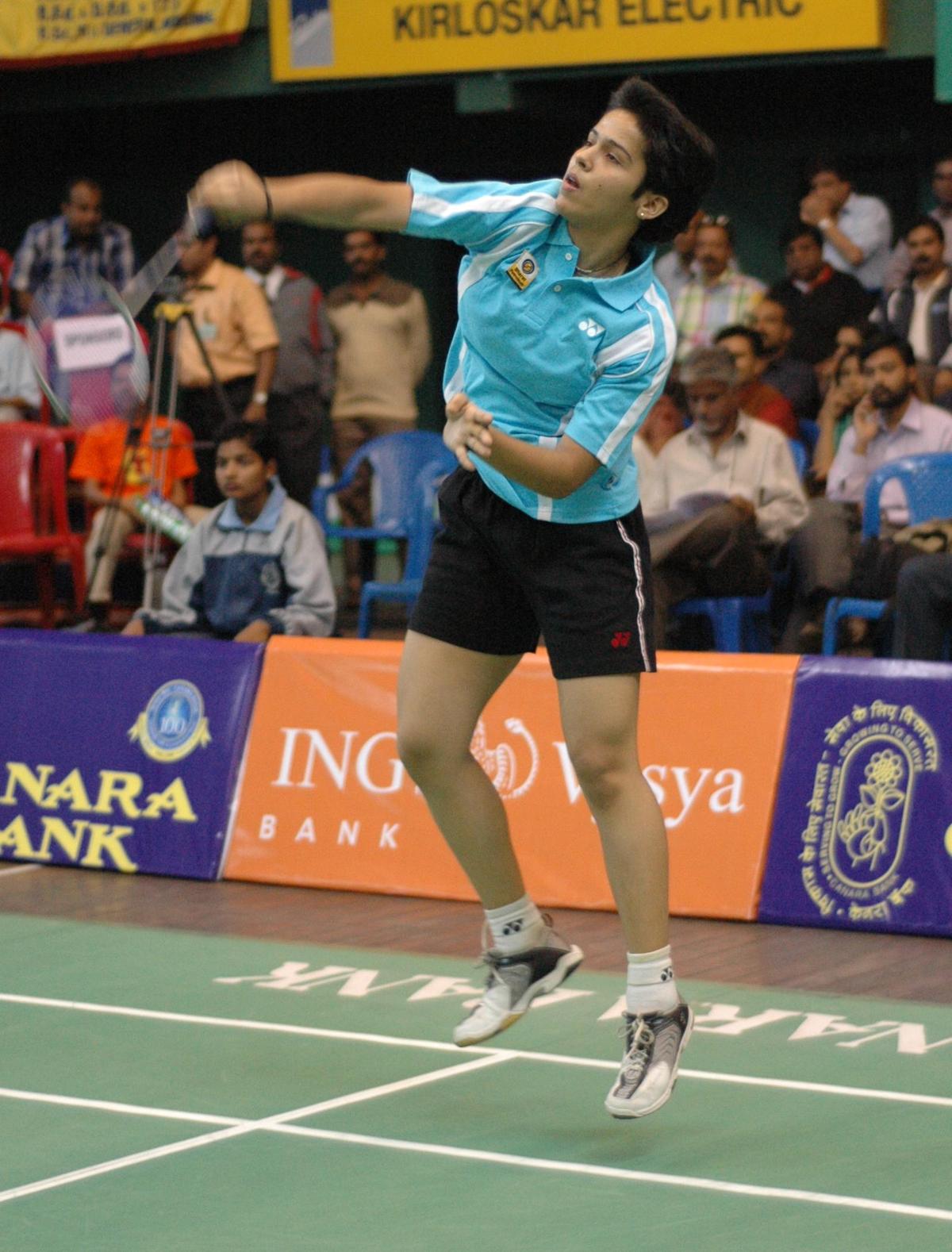
Saina announced her arrival on the senior circuit in 2006 with a title run at the Philippines Open, becoming the first Indian woman to lift a four-star tournament crown.
| Photo Credit:
K. MURALI KUMAR
Saina announced her arrival on the senior circuit in 2006 with a title run at the Philippines Open, becoming the first Indian woman to lift a four-star tournament crown.
| Photo Credit:
K. MURALI KUMAR
What do you think is the difference between you at 18 and the current generation of Indian talent?
I think what probably separates me from a lot of the girls today is just my pain threshold. That’s what determines how much you can train. I don’t know if it doesn’t exist now or if the players are just a lot more careful about their bodies, but I’m seeing a lot of injuries like shin injuries, damaged ACLs and meniscus tears. These are not easy injuries either. I don’t know whether I was just lucky or whether my body was stronger.
When you get pain in these areas, you have to wait and see how the injury develops over 2–3 months. So you take time to recover, and your ranking drops.
I think we have four really strong contenders under 20. But at the same time, I think we need to start seeing results at the senior level by next year. They will have enough experience by then. I was 17 or 18 when I won my first super series, so they need to start pushing for the same results now.
They have everything in place. They have good strokes and movement.
I think one of the reasons it’s taking longer to make a mark is that the game has become more of a defensive rally game now. Apart from An Se-Young, I think the girls are a little slower. It’s a lot of high lifts. That overall game isn’t the same, so maybe they will take longer to develop the physical strength that will give them success in today’s game.
Out of Anmol (Kharb), Unnati (Hooda), Tanvi (Sharma) and Anupama (Upadhyaya), who do you think has the right tools to make it to the next level?
I think right now the four girls, Anmol, Unnati, Tanvi and Anupama, are at the same level. If you put them in a tournament, each of them can beat the other on her day. So if you are looking at which one of them can go to the next level, I can’t say. I think if you want to be competitive at the world level, you need to see one player who can beat every other domestic player and really separate themselves from that group. That’s how it was with Sindhu and me as well. I’m not seeing that yet. Right now, I see all of them stuck at the same place. But at the same time, they are still regularly reaching the second and third rounds of international tournaments, which is a good sign.
Published on Dec 05, 2025