

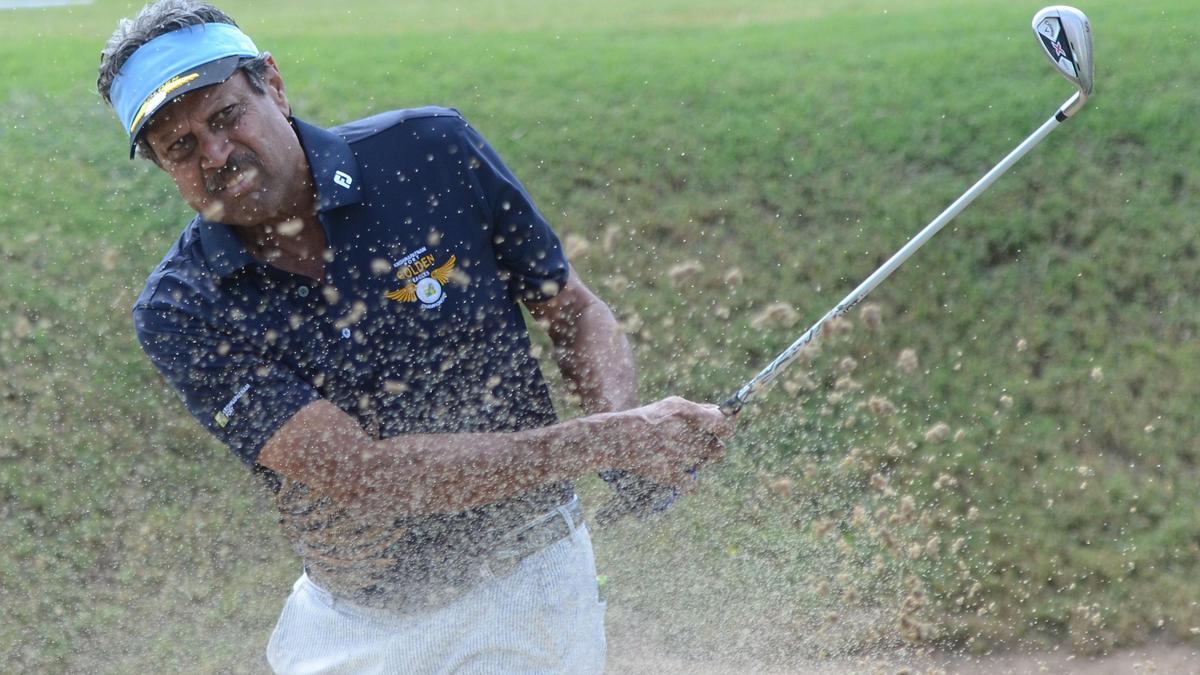
Kapil Dev: I’m looking for an Olympic medal for India in golf
From a humble beginning in rural Haryana to the pinnacle of world cricket, Kapil Dev has seen it all. But over nearly three decades, the captain of the 1983 World Cup-winning team has walked many miles to cover the distance from a curious golfer to the committed President of the Professional Golf Tour of India (PGTI).
In this one-of-a-kind interview with Sportstar, Kapil reflects on his love for golf and his vision for the future of Indian golfers.
Can you recall your first impression of golf?
I recall it was in the early 1990s, when Sir Gary Sobers visited India for business and told me he wanted to play golf. I didn’t know anything about the sport, so I called a friend and told him that Gary wanted to play it in Delhi, and I didn’t know whom to approach.
He said, “Don’t worry, I’ll just sign him in at the Delhi Golf Club.” Since Sobers wasn’t carrying his golf set, he needed one to play. At the Club he was asked whether he needed a set for a right-hander or a left-hander. Sobers said it didn’t matter — any set would do. I was further confused.
Then they asked Sobers what his handicap was. He said it was two if he played right-handed and one if he played left-handed.
The man at the Club looked shocked! He thought he had heard it wrong. But soon the confusion was over.
On the appointed day, I took him to the Club and walked the course while he played. He was so good. I admired his skill sets. He was truly the finest cricketing hero of our time. No cricketer was bigger than Sir Gary. He was given a cart and he played with two members of the club.
After a few years, once I stopped playing cricket in late 1994, a friend of mine, Karan Dubey, who played Ranji Trophy with me, said, “Let’s play golf.”
I said, “I don’t want to. It’s for old people. I still feel young. I want to stay away from people — I want to have time to myself.”
But he insisted. I said, “There are a lot of people.”
He said, “Just come. There won’t be anyone on the course.”
I practised for a few days at the Army course near Dhaula Kuan, and then, for the first time, I came to play at the Delhi Golf Club.
I took lessons from Vikramjit Singh and later Amit Luthra.
I remember around 100 people came to see me, and I looked at Karan and said, “You know I don’t want to be here.” He said the people would be there only on the first tee-box. “After that, only you, your friends and four caddies would be there. Nobody can walk with you,” he said.
So I started hitting the ball and, as luck would have it, I was hitting long and hard. I guess my cricketing muscles come into play whenever I strike the ball hard. Yes, it (golf ball) used to drift right and more right, but in terms of distance it was long. And I started enjoying that.
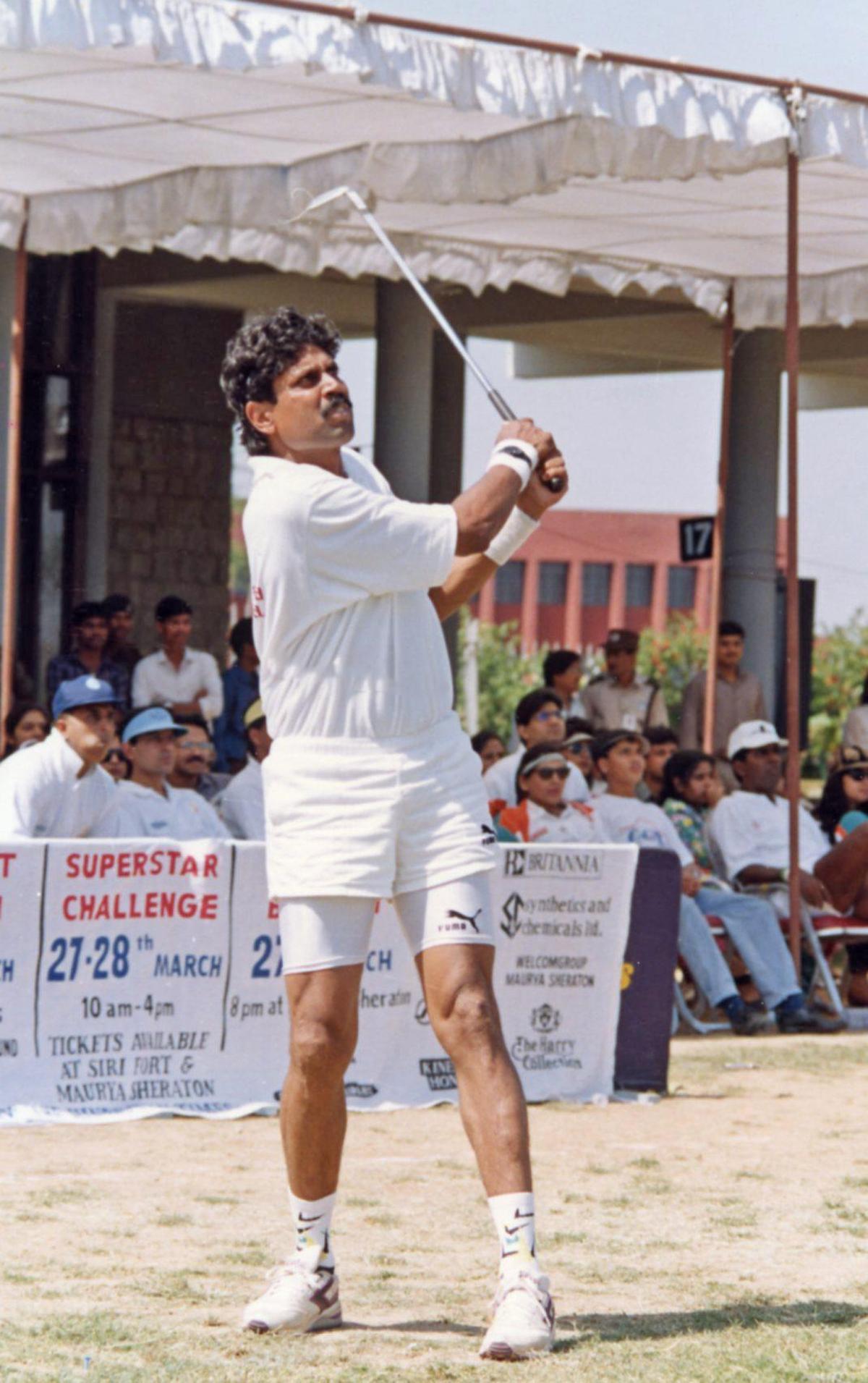
“I guess my cricketing muscles come into play whenever I strike the golf ball hard” – Kapil
| Photo Credit:
The Hindu Photo Library

“I guess my cricketing muscles come into play whenever I strike the golf ball hard” – Kapil
| Photo Credit:
The Hindu Photo Library
Any particular reason why you loved the sport and continue to play even after close to three decades?
I love the game because in golf you don’t depend on anyone. You are on your own — just me and my caddie, the two of us. We decide what to do. And the target is very small, which makes it more challenging. And, if you hit a bad shot, you don’t have to criticise anyone; you can only blame yourself. At some point, I felt I was born to play golf.
Did anyone say you had some special talent for golf?
I remember the first time I played with Vikramjit Singh, he noticed I had better hand-eye coordination than people with more experience. Secondly, Amit Luthra told me to keep my head down while taking a shot and not look up to see where the ball was going.
These were the two people I listened to and that’s how I got deep into golf. Thereafter, I played with some pros and continued learning from them. There was a time when they would play with me by giving me a few handicap strokes. But within three to five years of playing, I was the one giving them the strokes instead. I was so over the moon. I cannot express how it felt to start playing better than the people who gave you golf lessons. That was a huge high for me.
Sometimes I feel that if I had played golf during my cricketing days, I would have ended my career with 2,000 more runs.
Why do you feel that way?
Because the level of concentration in golf is a thousand times more than in cricket. So I always tell people — once in a while play other sports as well; it will help build your mind and focus, which is very important.
In my time, my friends and teammates never played anything other than cricket. I recall Sunil Gavaskar used to play badminton sometimes, but most of the players I played with didn’t pursue any other sport.
But looking back, I feel that within me I had a touch of sports. Many people can only play one game, but I can pick up any game and it will not take much longer for me to get better at it.
Do you remember your first handicap?
I think within a year and a half I was playing to a handicap of eight. I was practising very hard. On the driving range, I wanted to hit for two hours in the morning and return to the club for another couple of hours of chipping and putting.
That was mainly because I didn’t want to do anything else. I had so much spare time. Either I went for a run or exercised. So initially I spent two to four hours daily and really enjoyed it.
What kind of joy did golf bring you?
It’s like flying a kite without a thread and still controlling it. I think that’s what gave me a kick. I enjoyed it. I used to dream about it and I didn’t mind getting up early because I was used to it due to cricket.
A lot of people who aren’t good golfers don’t play in the morning; they play in the afternoon.
How did you become a regular at the golf club?
I lived close to the Delhi Golf Club. During my cricketing days, my wife’s grandfather filled up the membership form on my behalf. I don’t remember what happened then, but when I started golf the Delhi Golf Club was kind enough to give me honorary membership. They said I didn’t need to pay for being an honorary member.
But I said no — I want to pay and become a full member, which I am at present.
When did you become more ambitious as a golfer?
For two to three years, my handicap was between 10 and eight. But as time passed, it came down to two. Initially I didn’t realise how it happened. But later, I noticed I had become more ambitious. Where I was usually making a par, I wanted to chip in from around the green (for a birdie). Once you start thinking, ‘Can I chip in from around the green?’ you stop bothering about par. You’re aiming higher.
I think in a span of a year or two, I went from six to four to three. Two was my best handicap. I did play scratch, but two was my best.
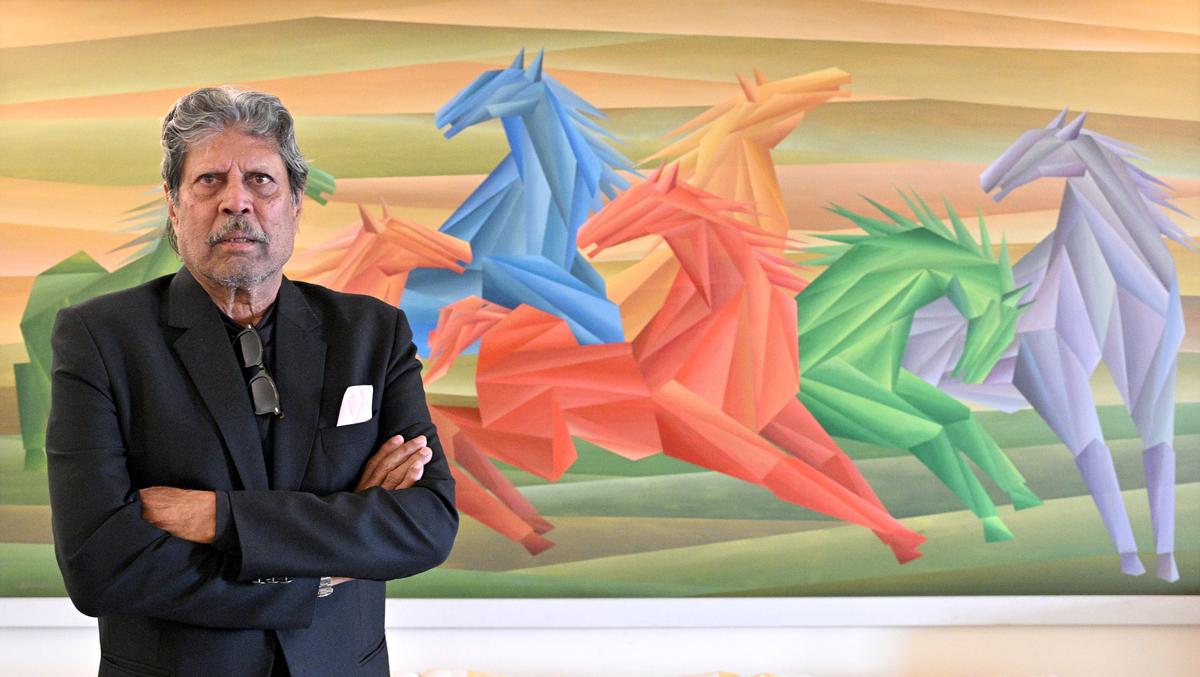
“The level of concentration in golf is a thousand times more than in cricket. So I always tell people — once in a while play other sports as well; it will help build your mind and focus, which is very important. In my time, my friends and teammates never played anything other than cricket. I recall Sunil Gavaskar used to play badminton sometimes, but most of the players I played with didn’t pursue any other sport.”
| Photo Credit:
SHASHI SHEKHAR KASHYAP
“The level of concentration in golf is a thousand times more than in cricket. So I always tell people — once in a while play other sports as well; it will help build your mind and focus, which is very important. In my time, my friends and teammates never played anything other than cricket. I recall Sunil Gavaskar used to play badminton sometimes, but most of the players I played with didn’t pursue any other sport.”
| Photo Credit:
SHASHI SHEKHAR KASHYAP
What were your best scores on some of the overseas courses you played in championship conditions?
I played at Dunhill, at St Andrews, and was two-under. That was around ten years ago.
How did the offer to head the PGTI come your way?
Honestly, I didn’t want to be in the PGTI. When Mr Gautam Thapar headed the PGTI for a long time, I used to talk to the players. It came from my love for the game. I used to say, “You deserve a much better life than what you have.”
I meant, five to seven crore rupees prize money for 300 people for the whole season? It’s not enough. Perhaps the golfers felt my love for the game was deeper. They said I should be part of the PGTI Board. I said I knew nothing about how things worked, but they made me a member four years ago.
You have maintained that the corporate sector could be a source of more money into mainstream golf.
I still believe corporate golf in India is far bigger than professional golf. It has more regular tournaments all round the year. I always say that the people who organise corporate golf should bring that money into the main channel.
Your tenure has seen a huge rise in prize money. What is your vision before you step down as PGTI chief?
We have touched around ₹60 crore this season. I hope we reach ₹100 crore within a couple of years, God willing.
How long do you wish to continue in this role?
I don’t want to continue after two terms. I believe nobody should remain in one seat longer than they are supposed to. Everyone should get a chance. Every president, every secretary has a job to do — don’t overstay.
Do you plan to increase the number of tournaments or increase prize money?
Ideally, I see 20–22 weeks of golf for the top players. For the next line of emerging players, another 10–15 weeks. For second-tier players, they can move from playing in Delhi to smaller cities like Meerut.
Second-tier tournaments are very important. But all this requires money. And I don’t want to go to the government. The government’s job is to look after other aspects of sport. We don’t want government funds. But if CSR funds can be used, given on this side, we’d be much happier.
What steps do you have in mind for the benefit of players?
At the PGTI, we want a tie-up with some airlines so our players can travel within India for tournaments at discounted fares. I want parity among players at all levels. At the moment we provide free food to all participants and their caddies during tournaments — a step we introduced recently.
Going forward, it will be more specific. Today we provide roti, rice, dal, dahi and sabzi. In future, we’ll consult dieticians. There are restraints today and players lack awareness. As awareness grows, their diets will improve qualitatively.
Before I let you go, can you share one realistic wish for Indian golf?
If I said an Indian could be in the top 10 in Europe or America in a year or two, that would be very difficult. But realistically, I’m looking for an Olympic medal for India in golf.
Published on Dec 15, 2025