

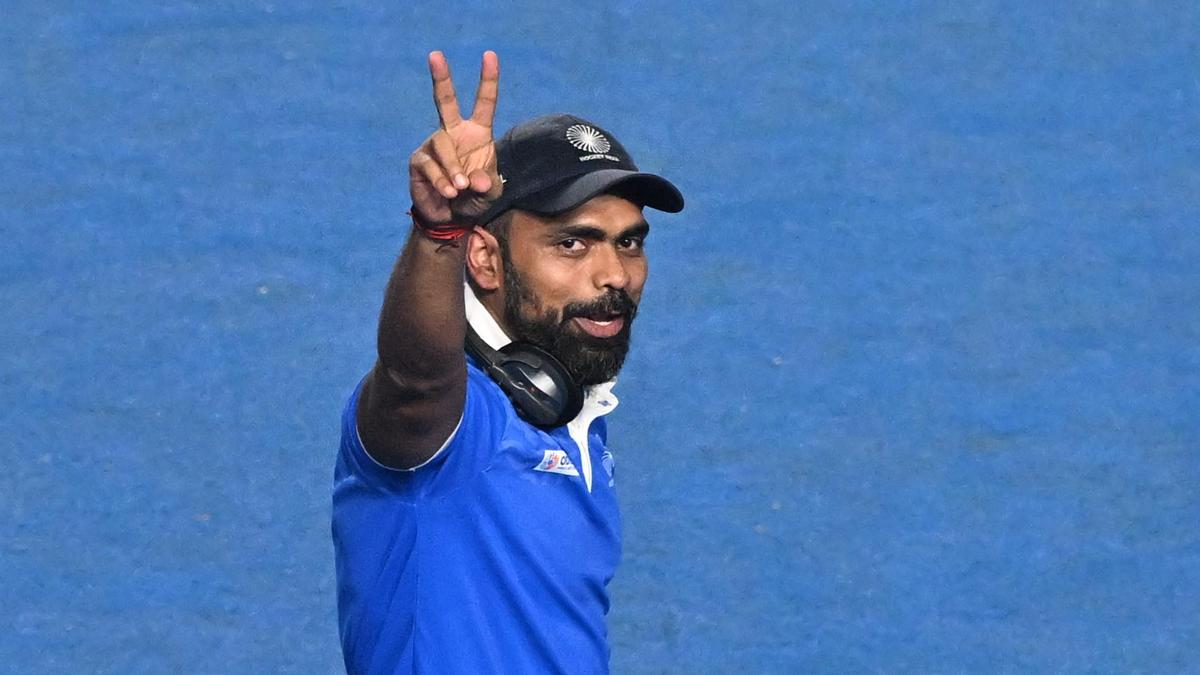
Junior Hockey World Cup: Coach Sreejesh savours India’s comeback win in bronze medal match
A deeply satisfied P.R. Sreejesh, the head coach of the Indian team, was effusive in his praise for his squad’s dramatic comeback victory against Argentina to secure the bronze medal at the FIH Men’s Hockey Junior World Cup 2025.
The third-place match at the Mayor Radhakrishnan Hockey Stadium here saw India stare down a challenging deficit, trailing 0-2 until the final quarter. However, the Blue Colts mounted a remarkable turnaround, scoring four goals in 12 minutes to defeat Argentina 4-2.
The win ensured India finished on the podium after a nine-year gap. It last won the title in 2016 in Lucknow and finished fourth in 2021 in Bhubaneswar and 2023 in Kuala Lumpur.
Sreejesh, a two-time Olympic medallist who transitioned to coaching after retirement in 2024, emphasised the importance of the high-stakes environment for these players’ future development.
“For the juniors, this is a great journey,” he said. “One thing that I told these guys is if you can survive this pressure, this is the base because you are going to face this in the future in the Olympics or other big tournaments.”
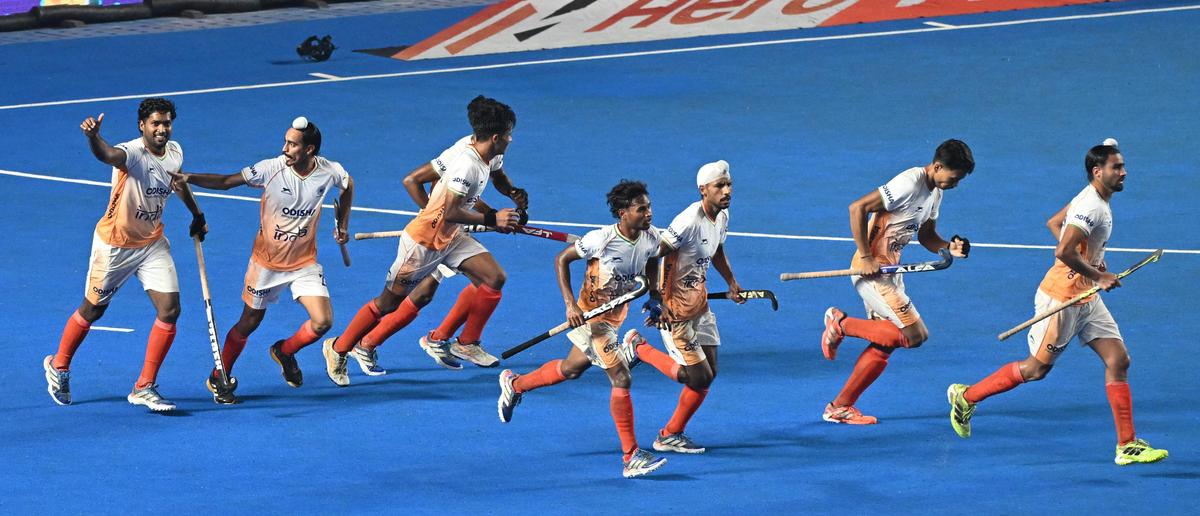
India’s third-place finish was its best performance in the Junior Hockey World Cup in nine years. It last won the title in 2016 in Lucknow and finished fourth in 2021 in Bhubaneswar and 2023 in Kuala Lumpur.
| Photo Credit:
RAGU R

India’s third-place finish was its best performance in the Junior Hockey World Cup in nine years. It last won the title in 2016 in Lucknow and finished fourth in 2021 in Bhubaneswar and 2023 in Kuala Lumpur.
| Photo Credit:
RAGU R
He singled out the final quarter’s surge as the definitive moment of their campaign.
“For me, down 0-2 and then coming out and winning 4-2 in the last quarter is the best thing to have happened in the Junior World Cup. There is huge pressure in this Junior World Cup, but they faced it and won that challenge.”
RELATED: India beats Argentina 4-2 to finish third in Junior Hockey World Cup 2025
Reflecting on the message to his players while trailing, Sreejesh stressed urgency and commitment, saying, “(I told them) Get that energy, you can’t be down 0-2, it’s hockey (and) you need to put your energy on the field. Once you come over on to the field, there is no point of regret; whatever you want to do, you have to do it there.”
Trust in the process
The coach felt the victory was a testament to the players’ unwavering faith in themselves and the system. He highlighted how the team chose to persist, even when the odds seemed stacked against them.
“It’s a process, you need to trust your teammates, you need to trust your quality, your strength,” he explained. “The team needs to believe in itself; they created opportunities. We were 0-2 down — (and) that’s almost down and out — but they trusted themselves, created opportunities and converted them.”
Known for his passionate presence in front of the goal during his playing career, Sreejesh admitted that his coaching style involves firm discipline when necessary. He maintained that tough love is sometimes required for growth.
“Sometimes you need to remind the people where they belong,” he said.
The regret of the semifinal defeat
Despite the joy of winning bronze, Sreejesh expressed a clear sense of regret regarding the team’s 1-5 defeat at the hands of eventual champion Germany in the semifinal.
“I (have) just started, it has just (been) 12 months for me. Let me learn something first. One victory doesn’t mean anything,” he said, maintaining a humble perspective on his own coaching tenure. “I missed winning the semifinal; that is the big regret for me.”
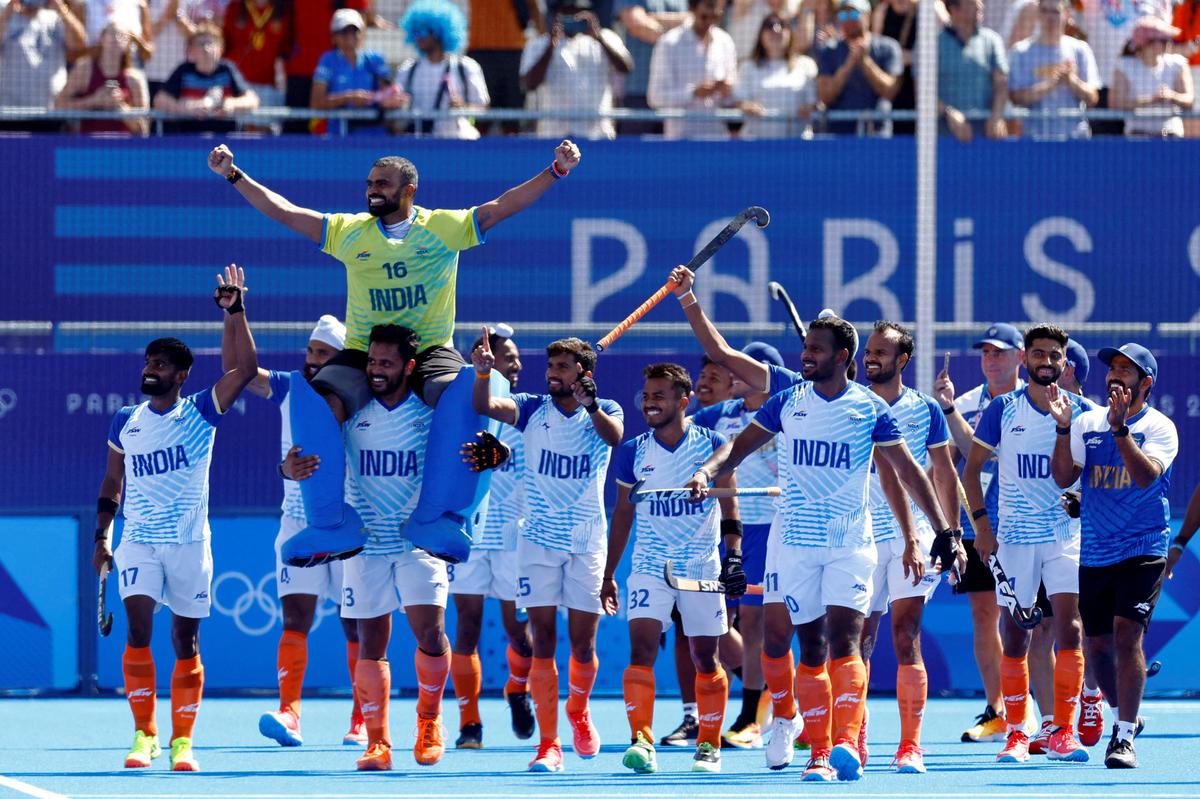
Sreejesh (in green) celebrates after winning the bronze medal at the Paris 2024 Games, a campaign that helped him inspire the men’s junior team in the World Cup this time.
| Photo Credit:
REUTERS
Sreejesh (in green) celebrates after winning the bronze medal at the Paris 2024 Games, a campaign that helped him inspire the men’s junior team in the World Cup this time.
| Photo Credit:
REUTERS
The 37-year-old shared that he used his own Olympic experiences—where India also lost the semifinals—to help the junior team cope with its disappointment. This shared pain provided a crucial lesson for their professional journey.
“If you want to win an Olympic medal (or a) World Cup medal, you will have to win the semifinal. I just shared those lessons that I learnt during the Olympic Games. In both the Olympics, we lost in the semis. I just shared how to come out of those heartbreaking moments,” he concluded.
Published on Dec 11, 2025