

FIH Junior Hockey World Cup: Podium drought ends, but progress remains uneven
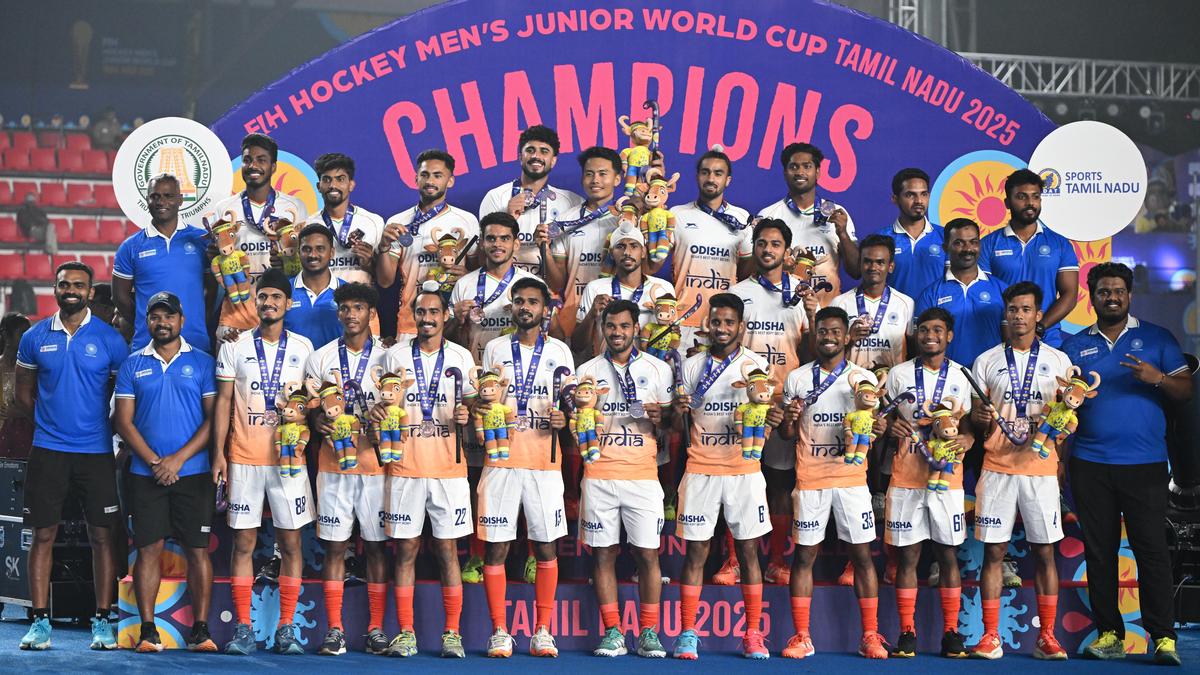
India clinched the bronze medal at the FIH Men’s Hockey Junior World Cup in Chennai, ending a nine-year wait for a podium finish, with a dramatic come-from-behind victory over Argentina after a late surge in the final quarter at the Mayor Radhakrishnan Hockey Stadium.
While the medal is a welcome result, the most intriguing outcome of any age-group global event such as this is the emergence of future stars. For India, however, it was a disappointing campaign despite dominant wins over weaker opponents in the pool stage. Coach P. R. Sreejesh’s squad struggled significantly in the crucial knockout matches. The biggest concern was arguably the midfield — historically India’s strong suit — that lacked a standout central driving force.
From an Indian perspective, the campaign offered little beyond Prince Deep Singh’s commendable goalkeeping and Arshdeep Singh’s attacking flair. The coach, however, highlighted the bronze-medal match as the campaign’s definitive moment, stating: “For me, being down 0-2 and then coming out and winning 4-2 in the last quarter is the best thing to have happened in the Junior World Cup. This was a huge pressure moment, but they faced it and won that challenge.”
In the final, Germany secured its record-extending eighth title, triumphing over Spain 3-2 in a shootout after the match ended in a one-all stalemate. This marked Die Honamas’ 13th podium finish in 14 editions.
Runner-up Spain was arguably the tournament’s most visually pleasing team. Featuring skillful Catalan players, their silky stickwork and masterful midfield domination were reminiscent of the country’s all-conquering football team of the 2000s. Yet, their hopes of lifting a maiden world title were dashed in a thrilling shootout.
For the other hockey heavyweights, results were mixed. Belgium and the Netherlands both progressed to the quarterfinals but were unable to advance further. Meanwhile, France and New Zealand showcased steady progression. France, silver medallist in the previous edition, ultimately lost to Germany in a quarterfinal shootout.
Conversely, traditional powerhouse Australia had a poor outing. The Burras, who had won the Sultan of Johor Cup just prior to the event, looked vulnerable throughout and surprisingly failed to make it to the last eight.
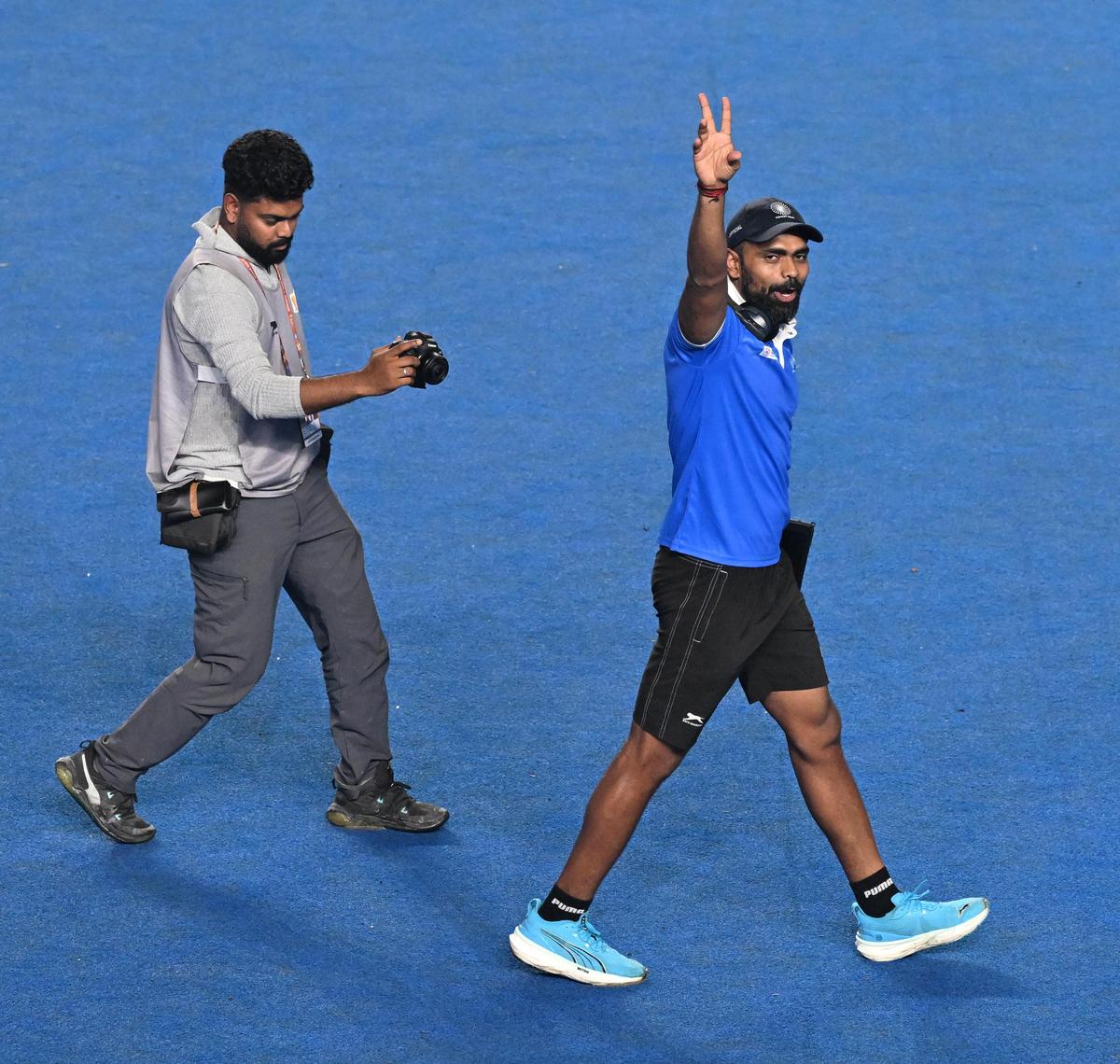
A jubilant P. R. Sreejesh celebrates after India’s win in the bronze medal match.
| Photo Credit:
R. Ragu

A jubilant P. R. Sreejesh celebrates after India’s win in the bronze medal match.
| Photo Credit:
R. Ragu
Small steps on the grand stage
While the usual heavyweights made their presence felt in the knockout stages of the tournament, the expanded 24-team league stage also gave many up-and-coming sides a taste of the world stage.
Oman finished bottom of the pile in its maiden appearance, conceding 48 goals across its six matches. The side, which was brought in as a last-minute replacement for Pakistan, will take home an abundance of lessons but also a slice of history — captain Alhussin Al Hasni scoring the country’s first World Cup goal, against Egypt.
“The biggest thing in sport is to show up,” head coach Mohammed Jandal Bait said. “Sport is about winning and losing, but it is also about building character. I have seen small improvements in my players in every match.”
Namibia, another tournament debutant, endured a rollercoaster of emotions. Johann Weyhe’s side was trounced by both Spain and Belgium in Pool D but managed to beat continental rival Egypt to earn its maiden win.
A gut-wrenching shootout loss to Austria, followed by another defeat to Canada, meant that it finished 23rd. “It was an interesting tournament. The environment definitely tested us. There’s a lot we can take back home and show the younger guys looking to play the next World Cup,” skipper John-Paul Britz said.
FIH president Tayyab Ikram’s decision to incorporate a Challenger Trophy for teams playing the 17th-24th classification matches provided them with an extra injection of zest.
It was no surprise then that teams like Austria and Canada put their best foot forward in these knockout matches.
Austria, which qualified through the second division of the EuroHockey Championship, won back-to-back play-off matches via shootouts thanks to the exploits of custodian Lorenz Breitenecker, but fell at the final hurdle to Bangladesh, a side that gave Australia and France a tough run in the league stage.
“I think we’ve been playing better as the tournament has progressed. Extending the tournament to 24 teams has allowed us to play the best teams, and our boys have realised they are not far off,” said Bangladesh head coach Siegfried Aikman, who has made a habit of improving lesser-heralded teams, following his achievements with Japan (Asian Games gold in 2018) and Oman (bronze at the 2024 Hockey 5s World Cup).
Tournament top-scorer Amirul Islam (18 goals), with his lanky frame, fuzzy hair and venomous drag-flick, turned out to be a fan favourite in Madurai.
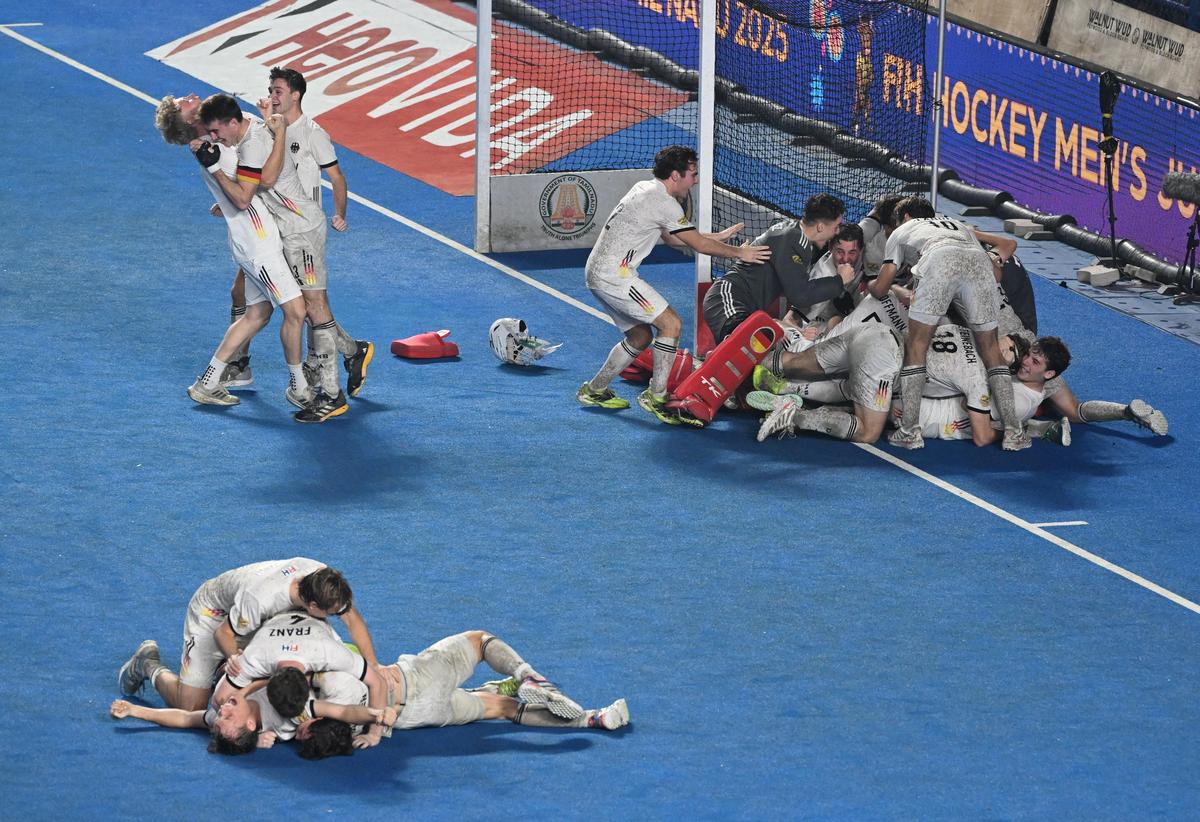
In the final, Germany secured its record-extending eighth title, triumphing over Spain 3-2 in a shootout after the match ended in a one-all stalemate. This marked Die Honamas’ 13th podium finish in 14 editions.
| Photo Credit:
R. Ragu
In the final, Germany secured its record-extending eighth title, triumphing over Spain 3-2 in a shootout after the match ended in a one-all stalemate. This marked Die Honamas’ 13th podium finish in 14 editions.
| Photo Credit:
R. Ragu
Reality check
While the 13-day tournament showcased fierce competition on the turf, it simultaneously exposed glaring systemic financial deficiencies in hockey. Excluding established nations such as India, Germany, Belgium, Australia, Argentina, Spain and the Netherlands, many participating teams faced severe financial obstacles simply to attend the event. Several resorted to crowdfunding, while the majority were self-funded by players’ families and friends. “Obviously, every camp you go to, you pay for,” said New Zealand player Milan Patel. “When we went to the Sultan of Johor Cup a couple of weeks ago, we paid for that. It’s not easy… I think, luckily, we have sponsorships from family friends and a lot of fundraising on tour.” The presence of family members in the stands offered a poignant display of the profound passion that drives athletes in sport.
Indian women fall short in Chile
The Indian women finished a disappointing 10th at the FIH Hockey Junior World Cup 2025 in Santiago, Chile. Despite dominant wins over lower-ranked sides, a crucial 1-3 loss to Germany in the pool stage meant it missed the quarterfinals on goal difference. The team struggled with consistency and penalty-corner conversions in the classification matches, ultimately falling 1-2 to Spain in the ninth–10th place play-off. In the final, the Netherlands sealed its third consecutive title after defeating Argentina.
Honour board
Men’s
Gold – Germany
Silver – Spain
Bronze – India
Women’s
Gold – Netherlands
Silver – Argentina
Bronze – Belgium
Individual Awards
Best Player and FIH Rising Star of the Year: Casper van der Veen (NED)
Hero Top Scorer: Amirul Islam (BAN)
Best Goalkeeper: Jasper Ditzer (GER)
Published on Dec 18, 2025