

F1 season throwback: Midfield teams gain momentum before Formula One’s 2026 reset
Away from the champagne popping, celebratory donuts and the coronation of a new World Champion, the 2025 Formula One season also became a canvas for strokes of improvement and illustrations of tenacity.
With the imminent onset of new regulations in 2026, most expected teams to put a lid on development early in the season and focus on the subsequent car. However, despite the rewards being temporary, many midfield teams made steady progress through the year, climbing the constructors’ standings.
Williams made the most headway. The 137 points achieved by the team this season were more than eight times its tally from the previous year. “Our future isn’t racing for 8th, 9th or 7th. Our future is racing for championships. You’ll see we’re making sacrifices for the next few years to bring ourselves to where we need to be,” Williams team principal James Vowles had told Sportstar on the sidelines of the Saudi Arabia Grand Prix in April this year. Yet the team still managed to rake in more points than it had across the last seven seasons combined.
“The Williams story, for me, underlines the importance of drivers. They have not had two top drivers since 2016,” said former F1 driver-turned broadcaster Karun Chandhok. With Felipe Massa and Valtteri Bottas behind the wheel, the Grove-based team had finished fifth in 2016 with 138 points.
“Carlos Sainz was winning races last year at Ferrari. He’s really at the top of his game. Having him alongside Alex Albon, suddenly they are driving the [Williams] team forward,” he added.
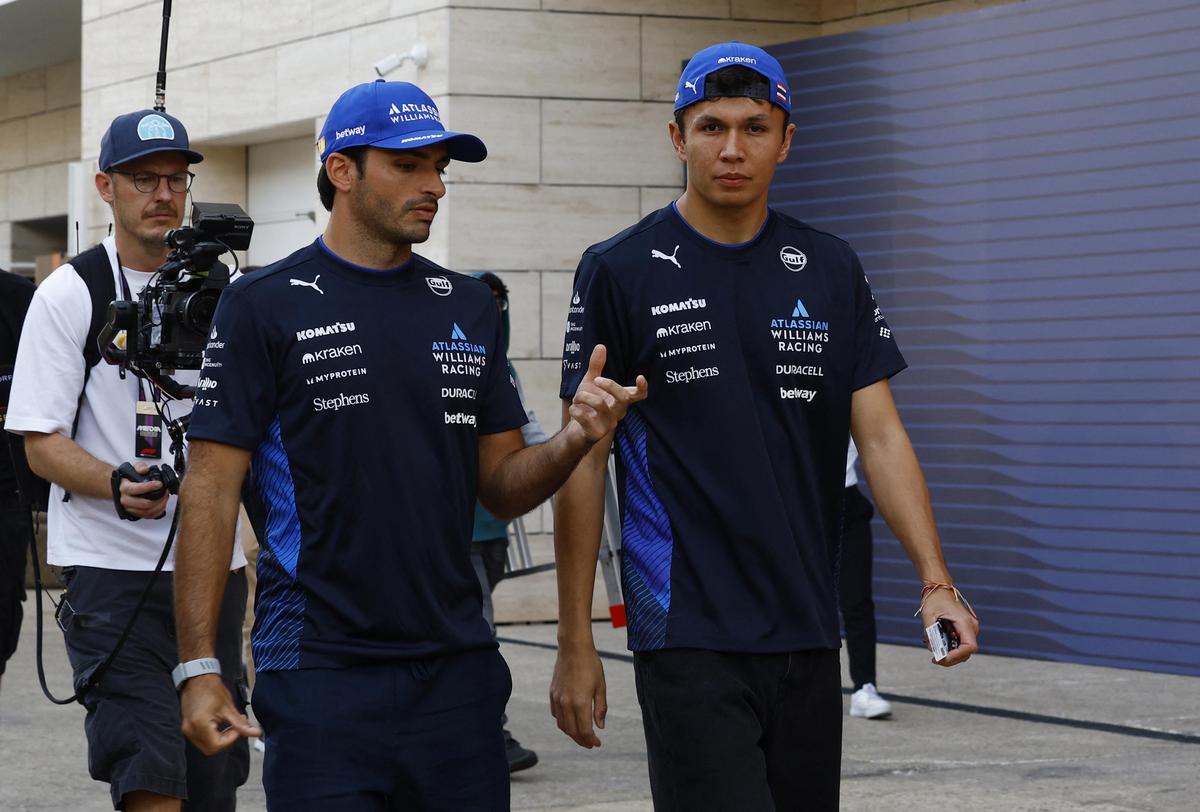
Alex Albon and Carlos Sainz finished eighth and ninth in the drivers’ championship with 73 and 64 points, respectively.
| Photo Credit:
REUTERS

Alex Albon and Carlos Sainz finished eighth and ninth in the drivers’ championship with 73 and 64 points, respectively.
| Photo Credit:
REUTERS
Albon and Sainz finished eighth and ninth in the drivers’ championship with 73 and 64 points respectively. The last time the British team had two drivers in the top 10 was in 2015. In April, Vowles termed his driver pairing ‘a breath of fresh air’. “Neither one wants anything more than for the team to be successful, which means that every meeting we have is about the greater good. How do we make it better next year? What’s our direction of travel? What can I do to help?” he had said. Sainz also bagged two podiums during the year, in Baku and Qatar, breaking the team’s unwanted four-year streak.
The season, however, ended on a slightly sour note. Both drivers failed to finish in the top 10 at the Abu Dhabi Grand Prix, and Sainz said it underlined how much more remained to be done to replicate the success of the 20th century.
“I hope it serves as a good wake-up call to the team, that after a podium, you come back to Abu Dhabi, and we were quite weak. I’m actually happy this happened, so we go into the winter without falling asleep,” Sainz told reporters.
Forward steps
Despite the early-season melee involving Red Bull’s second driver seat, which saw Yuki Tsunoda replace Liam Lawson after just two races, Racing Bulls forged a strong campaign, doubling its points haul from last year. Leading the charge for the Faenza-based outfit was rookie Isack Hadjar, who bagged 51 points in his debut season, including a podium finish at Zandvoort.
RELATED | Inside the three-way battle that made Lando Norris an F1 champion
The diminutive Frenchman will now have to cope with the ill-fated second seat alongside Max Verstappen in 2026, hoping to be the last man standing in the game of musical chairs. “For me, he was the top rookie of the season,” Karun exclaimed. “I hope he doesn’t suffer the same pain as all the others who’ve gone to Red Bull recently. He’s a great kid. There’s a real inner fire in him,” he added.
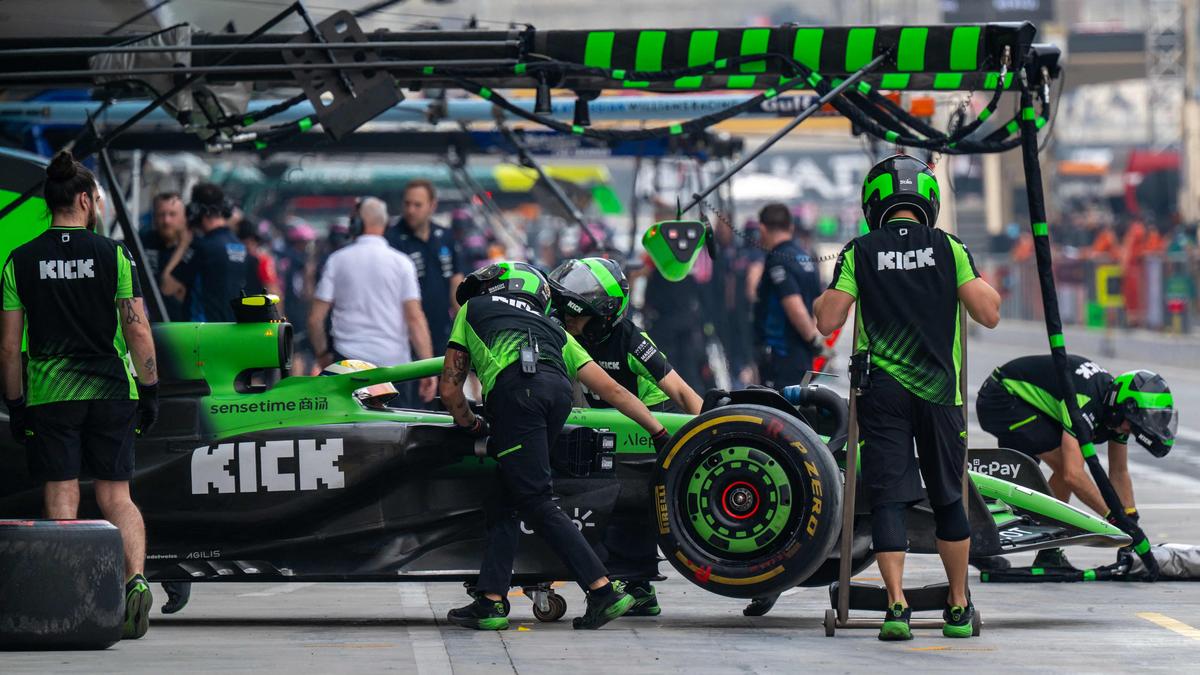
Kick Sauber also climbed the constructors’ ladder in its final season before rebranding as Audi’s works team. Nico Hulkenberg finally put a full stop to the longest wait for a podium in F1 history, finishing third at the British Grand Prix in his 239th race start. Back-to-back feeder series champion Gabriel Bortoleto contributed 19 points, including four top-10 finishes in six races during the European leg.
Reset button
The forward strides made by the midfield will, however, be washed away by a wave of change as a new era dawns in the top tier of single-seater motorsport. The 2026 regulations, focused largely on engine-related changes, will effectively clear the slate. Under the new statutes, the power unit will be 50 per cent electrical, up from the 15 to 20 per cent share that has defined the hybrid era since 2014. The MGU-H (Motor Generator Unit – Heat), which converted exhaust heat energy into electrical power, has also been removed.
“There is a huge challenge for teams to figure out how they’ll charge these big batteries without the MGU-H. There’s going to be a lot of emphasis on the software to get the right combination of electric and engine power for the whole lap,” Karun explained.
“The drivers will not be able to drive at 100% all the time. They will have to be careful about using their energy. We’re going to see a very different style of racing. The intelligent drivers will be the successful drivers next year,” he added.
The renewed reliance on engines could tilt the balance towards traditional power unit manufacturers such as Mercedes and Ferrari, rather than customer teams, when the cars roll out for the season-opening Australian Grand Prix.
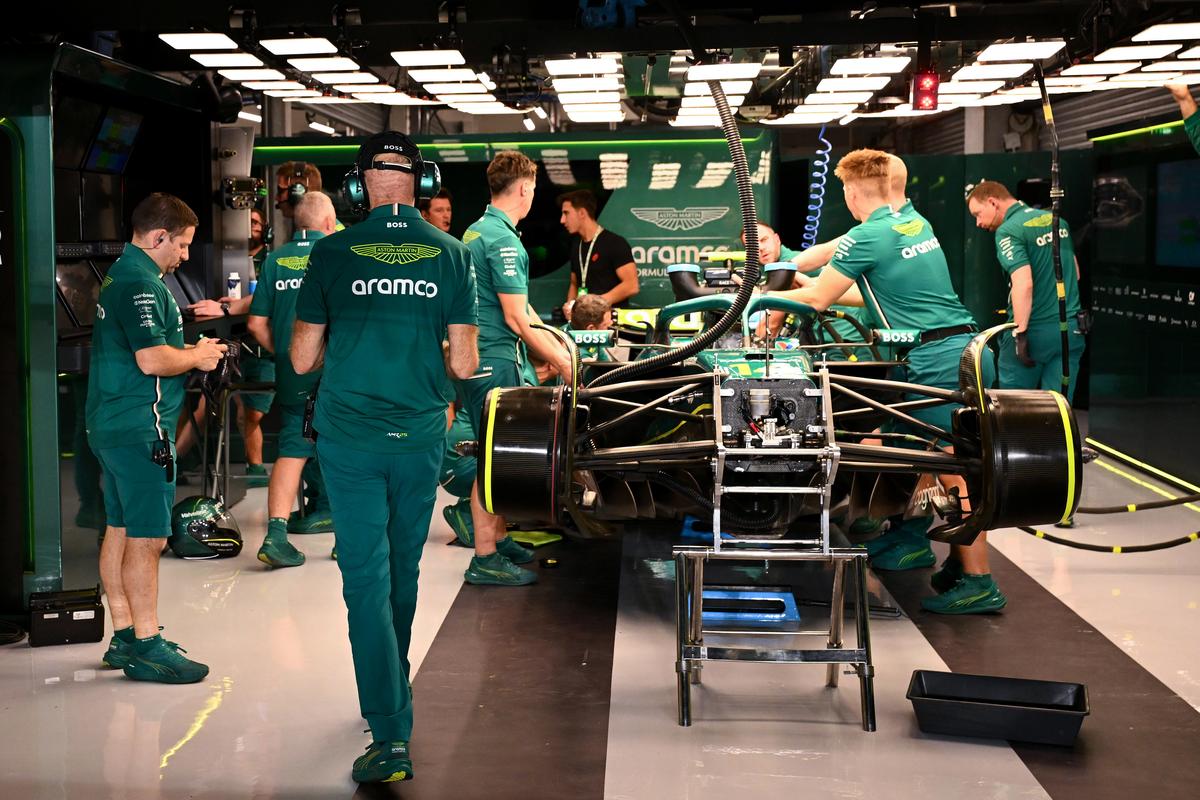
Under the new F1 regulations, the power unit will be 50 per cent electrical, up from the 15 to 20 per cent share that has defined the hybrid era since 2014.
| Photo Credit:
Getty Images
Under the new F1 regulations, the power unit will be 50 per cent electrical, up from the 15 to 20 per cent share that has defined the hybrid era since 2014.
| Photo Credit:
Getty Images
“Someone will get the engine formula fantastically right, and some will get it fantastically wrong. I hope that we don’t have big gaps, because we want everyone to be close together for the show,” the former Red Bull junior opined. “We’re going to see a lot of development in the first 18 months. What you see in Melbourne for the first race next year is not a guarantee. We’ll see a lot of development and progression through the year,” he added.
The former Hispania Racing Team and Lotus Racing driver also noted: “The FIA has created a system where, if a team is too far behind, they will get some dispensation to make some big changes. So, there’ll be some games playing with all of that as well.”
When the track opens for preseason testing in Bahrain in three months, midfield teams will hope the regulation reset acts as a catalyst for further progress. Because one backward step might be enough to send them tumbling down the pecking order.
F1 innovations for 2026
OVERTAKE MODE – It replaces DRS, a strategic tool giving extra power for overtaking to drivers who are within a second of the car in front. It can be used in one go or spread over a lap.
BOOST MODE – This will be a driver-operated energy deployment used in attack or defence, depending on track position. It will provide maximum power from the engine and battery, anywhere on the track, at the push of a button.
ACTIVE AERO – It refers to movable front and rear wing elements with Corner and Straight modes. Formula One says it will enable “strategic adaptability and maximises full usage of the car’s power through greater on track grip.”
RECHARGE – It will be any opportunity for drivers to recharge their car’s battery with “recovered energy from braking, on throttle lift at the end of straights and even corners where only part power is applied.”
Published on Dec 18, 2025