

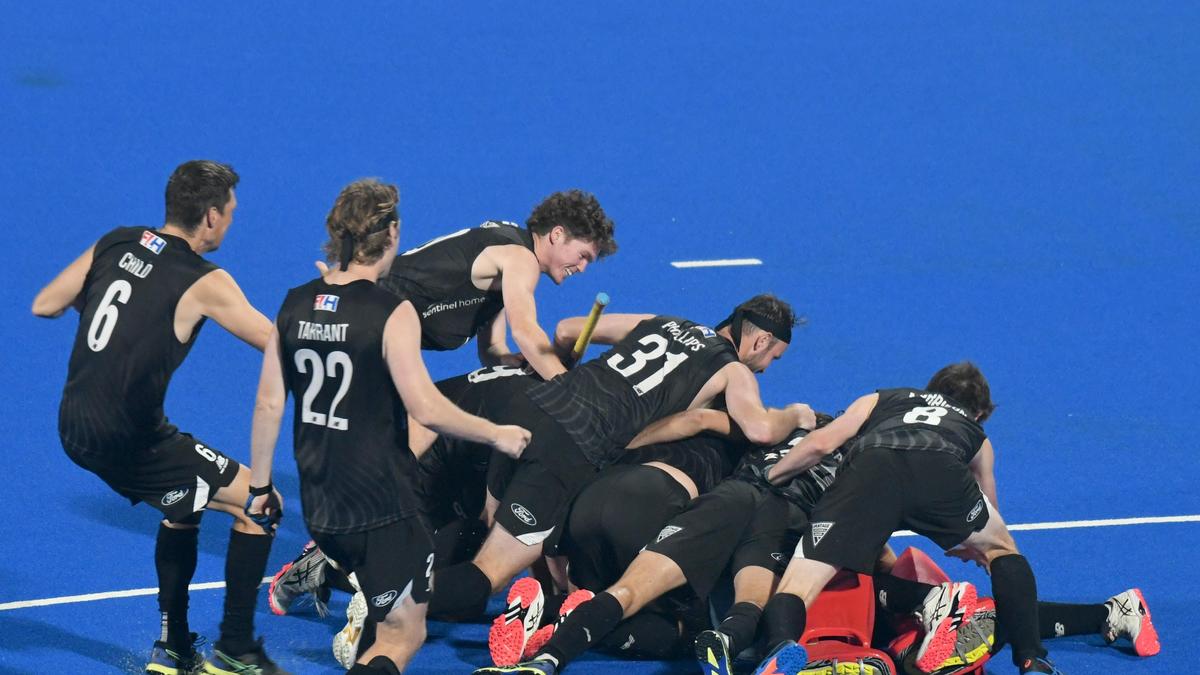
Black Sticks’ Pro League absence begins to hurt – How New Zealand is struggling to keep up with world hockey’s elite
The gold medal at the 1976 Olympic Games in Montreal remains New Zealand men’s hockey team’s greatest accomplishment till date. It also has two silver medals at the Commonwealth Games in its haul, the latest coming in 2018.
Despite the modest honours, the Black Sticks have been consistent in making the cut for every major tournament. They’ve featured at every World Cup since 1998 and every Olympics since 2004.
In recent years, the FIH Pro League has been an avenue for some of the world’s best teams to rub shoulders, outside of the World Cups and Olympics – their quadrennial cycle not being ideal for sustained exposure and game time. However, New Zealand has not featured in the Pro League in its last two iterations, despite being eligible to play.
Geographically located at the edge of the Southern Hemisphere, travelling through the year to different continents for Pro League fixtures was not economically feasible for Hockey New Zealand, the sport’s governing body in the country.
“It doesn’t support the sustainable, athlete-first programme we’re building in New Zealand,” interim chief executive officer Ken Maplesden had said when announcing the decision in July this year.
ALSO READ | Agustina Gorzelany and the Weight of Meaning
Without the Pro League, Black Sticks’ players have had to improvise to keep up with the ever-evolving pace of the sport.
“Obviously, it’s disappointing. We want to be playing in this league. It’s the best league possible. We’d love to be more professional than we are now. But financially, we just can’t do it. We cannot afford to send a team to three different tournaments around the year. We’ll have to go to Europe once or twice. We’d have to go to Argentina. We might have to go to India. So, we actually can’t afford that. Realistically, let’s be honest,” Nic Woods, captain of New Zealand, tells Sportstar on the sidelines of Hockey India League, where he’s playing for Hyderabad Toofans.
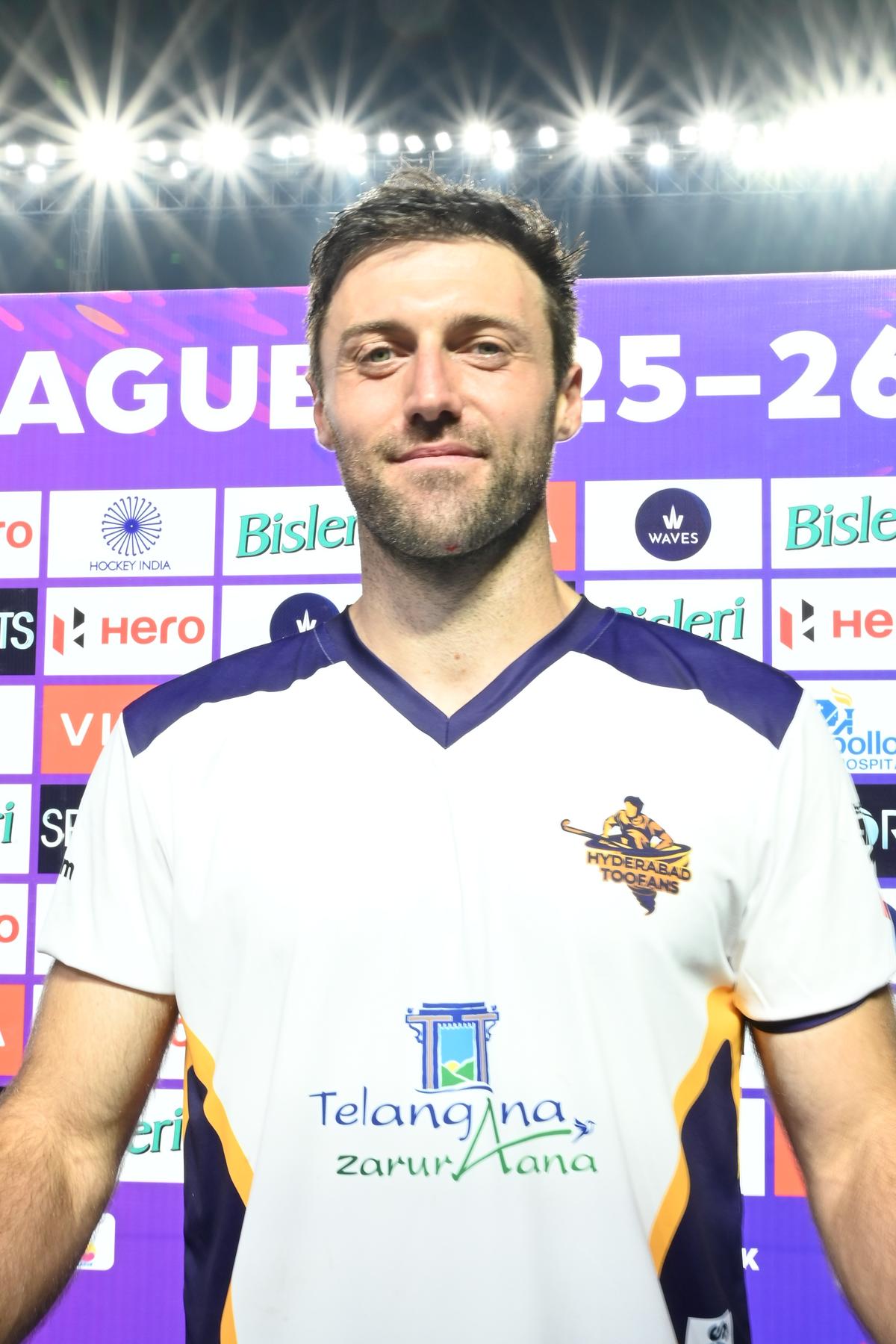
“Our program’s a little bit hit and miss in terms of connection. What we’re trying really hard to do is staying connected online, tactically and also just connecting with our friends,” says Woods.
| Photo Credit:
Siva Sankar Arokaran

“Our program’s a little bit hit and miss in terms of connection. What we’re trying really hard to do is staying connected online, tactically and also just connecting with our friends,” says Woods.
| Photo Credit:
Siva Sankar Arokaran
The gulf in quality
Over the last two seasons, New Zealand has played the FIH Nations Cup, a week-long competition at one place rather than a league spread across the globe, meant for the next-best nations outside the Pro League. The Black Sticks have won the tournament both times.
The FIH offers a promotion for the team winning the Nations Cup to the Pro League, but New Zealand has rejected the offer on both occasions. In 2025, Pakistan, the runner-up, was given the berth instead.
“We do not play the higher-ranked teams enough. It’s probably a disadvantage for us not being in the Pro League. But the reality is, we have to travel more than any other team. Unfortunately, we can’t be there. But I hope in the future we can. Because, I would love to be playing against the best teams in the world,” Kane Russell, who has over 200 caps for New Zealand, says.
A gulf between New Zealand and the top sides is beginning to appear. It finished 12th, the last place, at the Paris Olympics – its worst finish since 1964. At the World Cup, it finished seventh, thanks to an upset win over host India in the crossovers, but lost to Netherlands, Belgium and even Malaysia.
To add to the players’ predicament, Black Sticks have been without a centralised programme that can help the players train together at one place. The team has moved now to conducting city-based camps to prevent its players from spending on travel to attend them. This is starkly different from what teams like India, Germany, Belgium and Australia practice, where centralised training programmes bring the core group of players together at one place.
“We’re not centralised. So occasionally, we’ll come together, hit camps. And then, if we play Azlan Shah for example, we’ll go early, hit the camp in Malaysia before the tournament begins. But there’s hubs in each city of the country, which are getting stronger, because the Black Sticks are spread around them,” says Russell.
But joining camps in New Zealand is not always an option for players like Russell and Woods, who also play club hockey in Europe.
“Our program’s a little bit hit and miss in terms of connection. What we’re trying really hard to do is staying connected online, tactically and also just connecting with our friends. Doing that regularly and trying to upskill so that when we hit a tournament like the Nations Cup, we are hitting the ground running,” says Woods.
For those who stay in New Zealand, camps are slightly more regular and spread out across the country. For example, all players based around Christchurch and available for training, will head to the nearest training hub for their sessions.
Sean Findaly, just 22, has played for the Black Sticks since the Tokyo Olympics in 2021. Coming from a family that runs a club in Napier, Bay Independent hockey club, Findlay shares how players fund camps and practice games out of their own pocket at times.
“We’ve got a hub in Christchurch, in Auckland, and Wellington and Hamilton as well. So, those groups meet two, three, sometimes four times a week. And then on top of that, we meet for camps once every two months, depending on what we see in our programme. But we try to meet for actual hockey games to use our money a bit smarter. But yeah, we’re just doing the best we can and hoping to keep growing and delivering on the world stage,” says Findlay.
ALSO READ | Backed by Fulton, shaped by patience: Sanjay ready to lead Indian hockey forward
The PHL experiment
Simon Yorston is another upcoming Black Sticks member with 44 caps. The 25-year-old plays club hockey in England and has benefitted from the introduction of the Premier Hockey League (PHL) back home since 2024.
PHL, Hockey New Zealand’s only domestic competition for seniors, is a six-week-long competition with just four teams, where each team plays the other three twice. Six games are not a lot but it’s good for getting game-time when European hockey leagues break up for the winter break. It also fills in the calendar for local players, whose season with their respective clubs runs from April to August.
“I come back from Europe [in April], I get to play in our winter [for Hornby Hockey Club in Christchurch]. So, I get a few games at home which is nice. And then go back to Europe and the Premier Hockey League starts as the Europe season is about to end or their winter break,” Yorston says.
For those not playing in Europe, like Findlay, the lack of centralised camps and consistent matches gets in the way of planning ahead. For Findlay, the only target is to stay in shape for the World Cup. His only option is playing for his club, which would be affiliated with a regional association and will play against teams registered with the same parent body.
“We just had the PHL, which was fun. We have club hockey, which is obviously a smaller competition, but it’s still hockey. And then we have a really good training group in Auckland, where there’s a lot of guys working hard, pushing each other to try and be better each day.
“There’s a few guys that play around Europe and across the world, but I’m actually back in New Zealand for the next six months and heading into the World Cup, and then we’ll see what happens after that,” Findlay says.
Way forward
Despite the challenges, captain Woods says he and his players are ready to put up with the rigours with a smile. The Hockey India League features five players from New Zealand and more coming in over the upcoming seasons would be welcome.
One of the possible solutions he suggests is inviting teams to play in New Zealand, and connecting with the closer nations in Asia for bilateral test series. With enough to offer, at least in terms of playing, representing the Black Sticks might still be lucrative in an environment where the semi-pro life of club hockey seems the more viable option.
“It’s very much coach and structure led. I’m very fortunate to be here [HIL], and I’m so happy to be here with five Kiwis now. That’s a good experience for these guys. If we can have that every year, it would be amazing. I’ll keep pushing for that.
“We’ve got a few struggles, but we’re doing it with a smile. We’re trying our absolute best to perform with what we’ve got. What we need to try and do is connect with India more, connect with the Asian nations, in my opinion. I think that’s just going to benefit everybody,” Woods says.
Published on Jan 06, 2026