

At PWL, Indian wrestlers share mats with the world’s best, aim higher
Vishal Kaliraman missed his first international competition of 2026 with an injury. But the 25-year-old doesn’t sound like someone who regrets it. The men’s 65kg wrestler was supposed to begin his season at the Zagreb Open (UWW Ranking Series) in the first week of February. Instead, he has spent the last few weeks at New Delhi’s Chhatrasal Akhara, recovering from an ankle twist picked up during the Pro Wrestling League (PWL).
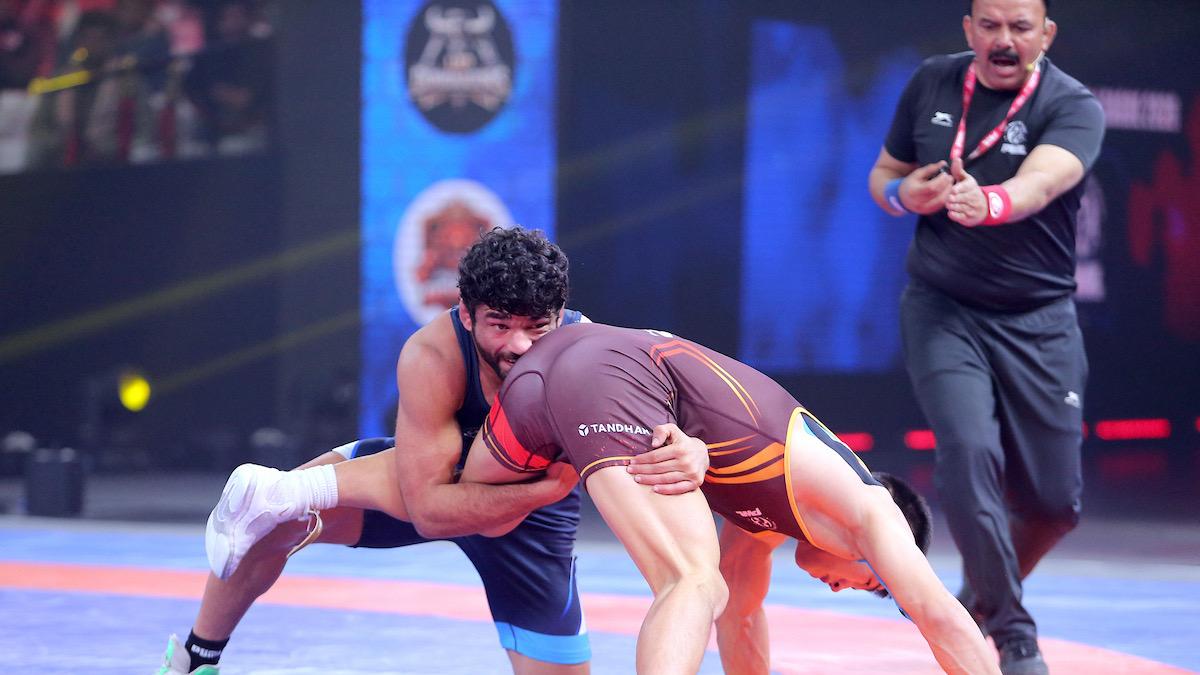
Wrestling for UP Dominators, Kaliraman picked up the injury during his bout against Mongolia’s Tulga Tumur Ochir. Ochir was representing Haryana Thunders.
Kaliraman went in as the underdog, but fought back from 0-6 down to win 6-6 on criteria against Ochir, the reigning Asian Games champion and a two-time Worlds medallist.
“Although I got injured during the bout, I didn’t even realise it. I’d wrestled against this same wrestler at the Asian Championships last year and had lost easily (0-8). But this time I was able to fight back and beat him. Although I missed a tournament because of it, I think the confidence I gained from that victory is worth it. I don’t regret taking part in the League at all,” Kaliraman says.
It’s a sentiment echoed by many wrestlers who competed in the 2026 edition of PWL. For them, the league offered something Indian wrestling rarely provides: a professional stage, elite opposition, and daily access to international medal winners.
The team-based league was first conducted in 2015. Its team format, colourful costumes, ring girls, smoke machines, theme music and TV production, paired with high-quality elite wrestlers from around the world, were a world apart from the rustic, mud-and-mat image Indian wrestling is often associated with. However, the league folded after four seasons, amid talk of management disputes and poor returns to investors.
So, when the league was announced again in late 2025, under a new management, wrestlers allowed themselves cautious optimism.
“A lot of us had followed the league when it was last conducted. At that time, I was a very young wrestler. I had always hoped to get to wrestle in the league. I really wanted my parents to see me on TV. As a wrestler, most of our matches are only shown on internet streaming. It’s different when you are on TV,” says 18-year-old Neha Sangwan, who competed for Haryana Thunders.
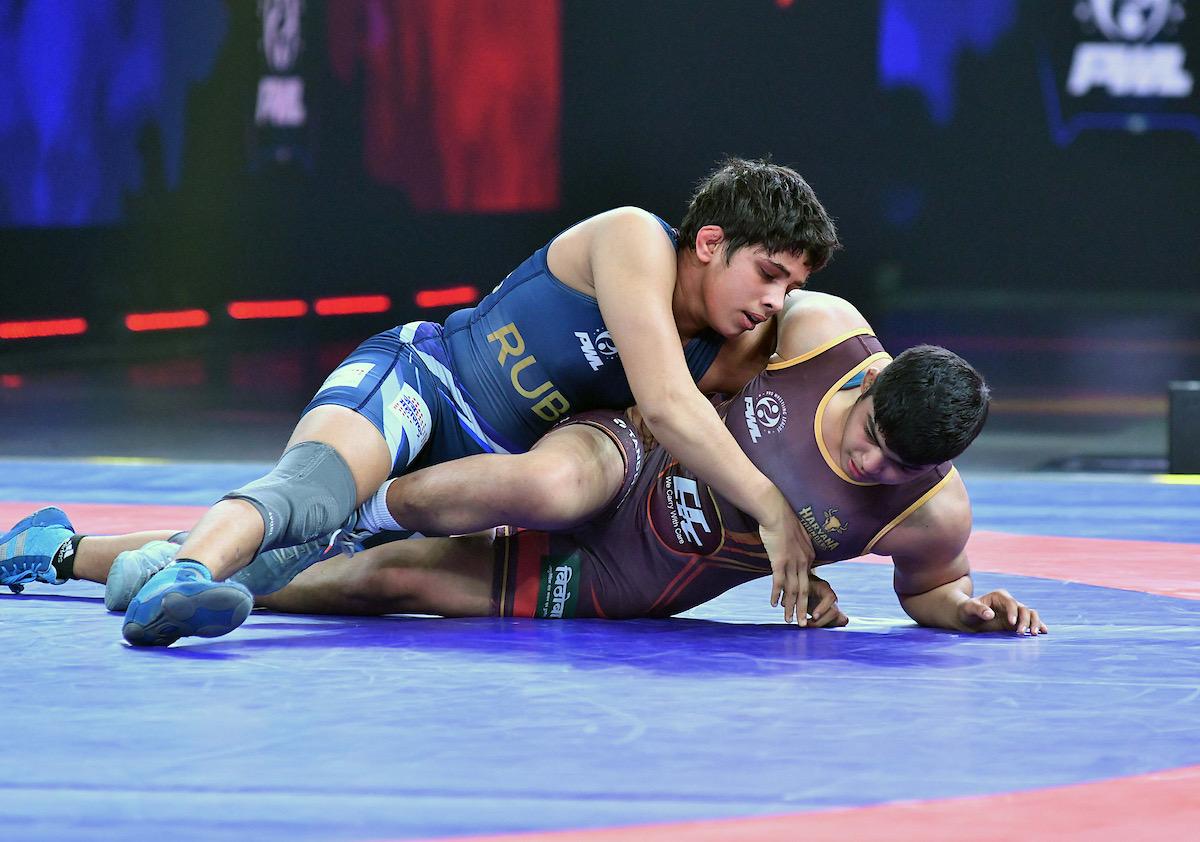
In the spotlight: Haryana Thunders’ Neha Sangwan (left) wrestles at PWL 2026, calling the League a rare chance to be seen on TV.
| Photo Credit:
Special arrangement

In the spotlight: Haryana Thunders’ Neha Sangwan (left) wrestles at PWL 2026, calling the League a rare chance to be seen on TV.
| Photo Credit:
Special arrangement
But the excitement came with nerves.
“We were looking forward to it, but at the same time, we were nervous because it was happening after a long time. We didn’t have a lot of ideas about where we would stay or how we would train or compete,” says Sujeet Kalkal.
International wrestlers had their concerns, too.
“The time zone and food were going to be different. I’ve also never competed on a team with guys and girls. I’ve competed on a team, but that was usually all girls,” says Karla Godinez, 2022 World Championships bronze medallist for Canada.
Before she signed up for the player auction last December, Godinez says she spoke to wrestlers she knew who had taken part in previous editions of the league.
“(Olympic champions) Erica Wiebe (of Canada) and Helen Maroulis (of the USA) had competed in previous editions. When I spoke to them, they only had good things to say, and that gave me confidence. The fact that the League was going to be held before the start of the international season also encouraged me. If it had been held in the middle of the year, for example, before the World Championships, I would not have taken part. I was also looking forward to experiencing a new culture and environment while also getting paid for it,” says Godinez, who wrestled for Delhi Dangal Warriors.
Most international wrestlers, though, were eager to sign up.
“A lot of guys from different countries wanted to get into this league. About 300 wrestlers tried to get into different clubs at the auction. Even now that I’ve come back to Ukraine, people ask me about the Indian League, how I travelled, how we fought, who we talked to. I got a lot of messages, both on Instagram and Facebook,” says Ukrainian heavyweight Oleksandr Khotsianivskyi, who wrestled for Tiigers of Mumbai Dangals.
Oleksandr, who had previously competed at the 2019 edition of the League, as well as in other leagues such as the Bundesliga in Germany, says he had no reason to second-guess the decision.
“Compared to the last time I competed in India, there were a lot of changes. There was more of a show. The stadium in which the competition took place was big, the costumes were beautiful, and the organisation was better. Everything was at the highest level,” he says.
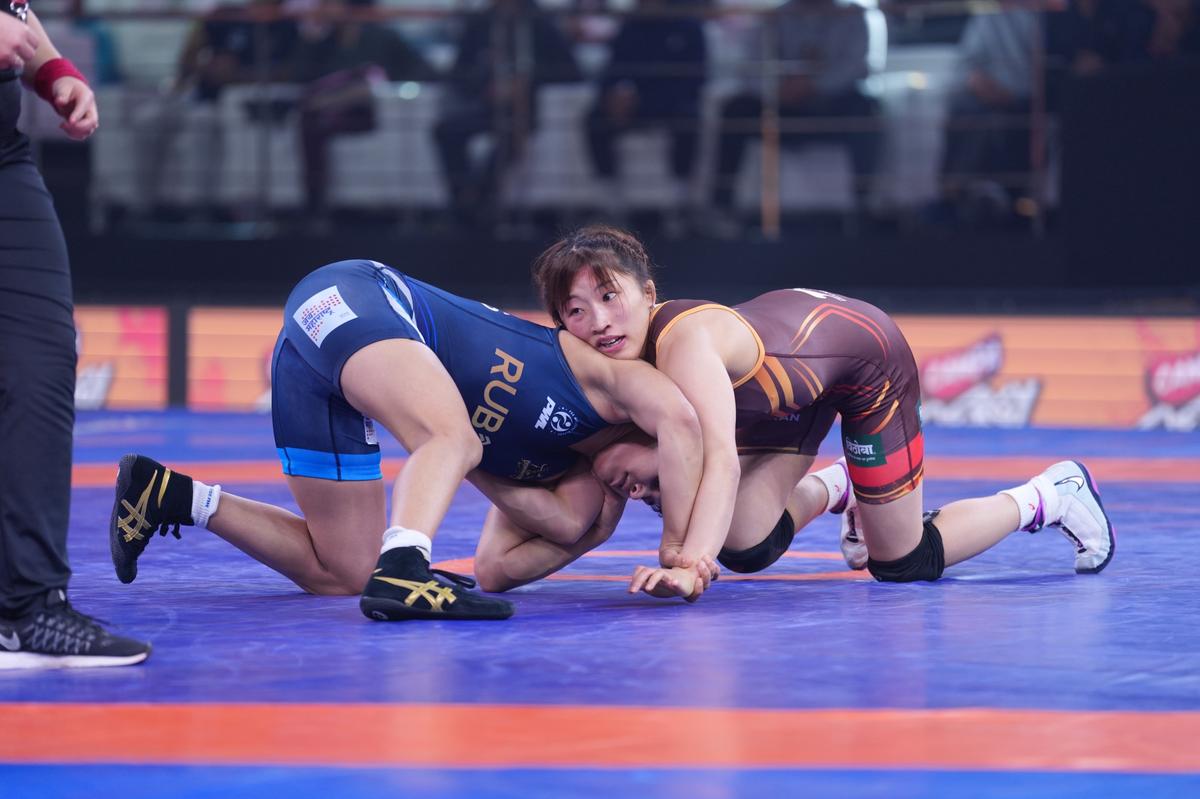
Sizing up opponents: Yui Susaki (right) during her stint in India, where she faced local talent and took stock of the next generation of challengers.
| Photo Credit:
Special arrangement
Sizing up opponents: Yui Susaki (right) during her stint in India, where she faced local talent and took stock of the next generation of challengers.
| Photo Credit:
Special arrangement
Oleksandr wasn’t the only one who appreciated the chance to compete in the League. Two-time Olympic medallist and Tokyo champion Yui Susaki, who was the highest-paid athlete at the auction, took the time to get a feel of the culture during her stay in India.
“I tried a lot of local food like butter chicken, and I also got the chance to see monuments like Humayun’s tomb,” Susaki told reporters.
The sightseeing was a bonus. The real point was the wrestling.
“The League is always a great experience for a professional athlete, because the strongest fighters from all over the world participate in the league. In any case, for a professional athlete, it is a confirmation of his level. It is good sparring and good competition. This year, the league was very strong,” says Oleksandr.
This was Susaki’s belief as well. The only time Susaki had ever been beaten in international competition was when she lost to India’s Vinesh Phogat at the Paris Olympics, and the Japanese wrestler said she came to India to suss out any future competition.
Although she only conceded points to one wrestler, Antim Panghal, Susaki had only good things to say about the opposition she saw in India.
“I heard that Indian wrestlers are very strong. That’s why I came to India. I think there are many young wrestlers who are good. They work very hard and have good mental strength,” Susaki told reporters during the League.
While Susaki had been looking forward to seeing the quality of Indian wrestlers, the latter were also eager to test themselves against top international opponents.
“Unless we are regularly in the Indian team, most of us only get a few chances to compete against international wrestlers. It is only when you wrestle against them that you get an understanding of what your level is. At the PWL, every international wrestler has won major medals, so it’s a big challenge to face them,” says Kaliraman.
And the internationals weren’t treating it like an exhibition.
“There’s a two-kilo cushion for every weight category, which is the norm in international competition, but every wrestler has to make weight before their bouts. Making weight is one of the hardest things in international wrestling. The fact that everyone in the PWL had to make the weight limit meant we were all taking the competition seriously.
The only advantage is that we had to make weight in the morning and only wrestled at night, which gave us a long time to recover, unlike in international wrestling, where we have to wrestle very shortly after presenting our weight,” says Kaliraman.
Kaliraman, though, wouldn’t trade it. He considers his win against Ochir a milestone towards his ultimate achievement: winning a medal at the 2026 Asian Games.
“Tulga is an Asian Games champion. It’s only if I beat him that I will be able to win a medal myself. Pehle kami thi (I had some weakness in my game in the past). That’s why I lost to him at last year’s Asian Championships. So, to be able to beat him in India gives me a lot of confidence that I can beat other top players when the chance comes,” he says.
But the bouts weren’t the only takeaway.
“We competed in the League for about three weeks. That’s a lot of time in which you can observe other wrestlers. I’ve never competed in the Olympics, but in my team, there were wrestlers who had. Even if you can’t always communicate with them, you can still learn a lot from the way these wrestlers prepare for their bout, their technique and their diet. There’s a knowledge exchange that happens,” says Sujeet.
That proximity builds belief as well. Former junior Worlds bronze medallist Neha might have had an excellent league, beating Godinez and European medallist Roksana Zasina over the course of the competition, but she says what was particularly memorable was being around Susaki.
“Susaki was in my team. At first, I was very shy of her because she’s such a legend in wrestling. I didn’t even know how I’d speak to her. But she was very open and friendly. I lost a very close match (to current Indian team member Manisha Bhanwala). She came to me and said I did very well and I had a long way to go. It gave me a lot of belief that Susaki thought so highly of me. When the League ended, Susaki told me that I should come to Japan and train with her. I told her I’d try to come to Japan, but I’d also come to Los Angeles for the Olympics and wrestle alongside her there,” she says.
Published on Feb 11, 2026