

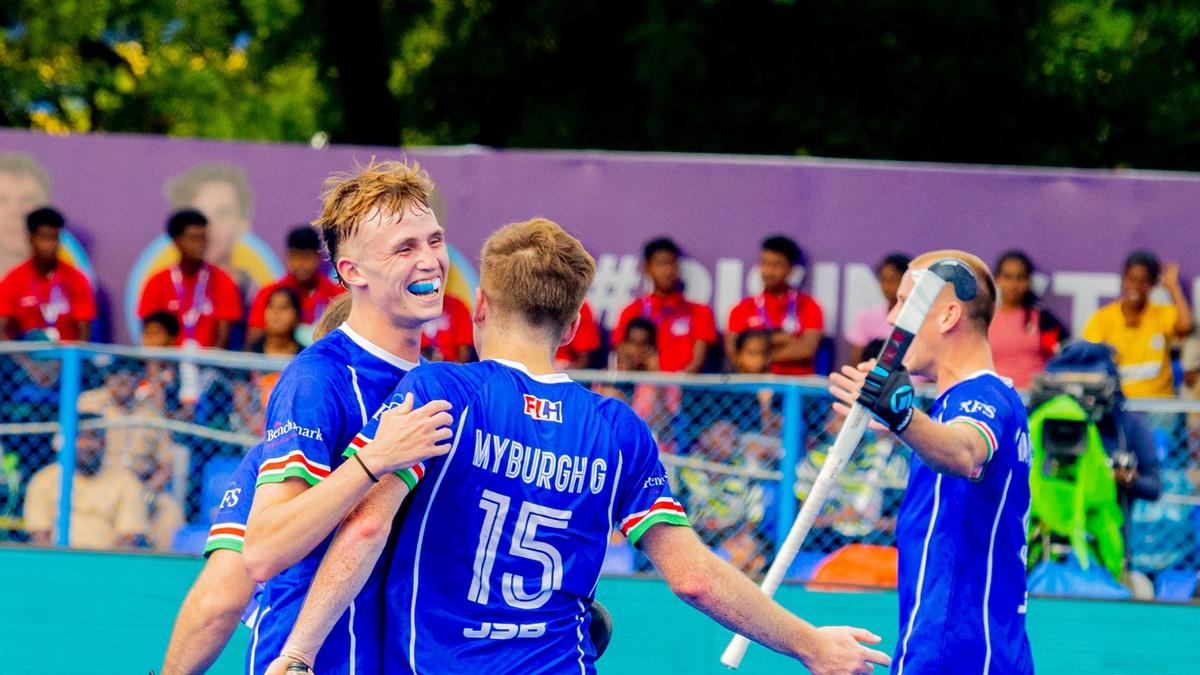
The bigger picture: How Namibia’s Junior Men’s World Cup dream is just the beginning
Namibia’s goal difference of -22 was the third-worst in the league stage of the FIH Junior Men’s World Cup 2025. It conceded 12 in its opening Pool D game against Belgium and 13 against Spain.
It stumbled to a shoot-out loss to Austria in the 17th-24th classification rounds, ending its hopes of winning the newly-instated Challenger Trophy, before falling to Canada. It will now finish among the two bottom teams in the competition.
But these defeats are only a small blip in the bigger picture for the sub-Saharan nation. Two years ago, even the most optimistic fan in Namibia would have dismissed the World Cup dream as unattainable. That is the scale of achievement that the side has pulled off by even qualifying for the Junior Men’s World Cup 2025. The boys have now lived their dream.
A campaign to savour
Namibia made the cut after finishing runner-up in the Men’s Junior Africa Cup 2024, which was held at home in Windhoek. The team had never been a regular contender in the continental event either. The 2024 edition was only the second time it participated in the qualifiers, eight years after its debut.
The nation was up against traditional heavyweights South Africa (6-time winner), Egypt (5-time winner), Zimbabwe and Kenya, with only three spots up for grabs. A once-in-a-lifetime performance saw Namibia beat everyone bar South Africa to book their tickets to the World Cup.
“We hadn’t been to a qualifier in about six (sic) years. So we didn’t know what to expect. We were thrown into the deep end when our first game was Egypt and our second was South Africa. We managed to beat Egypt 3-1, which kind of made the whole road easier,” said John-Paul Britz, the captain.
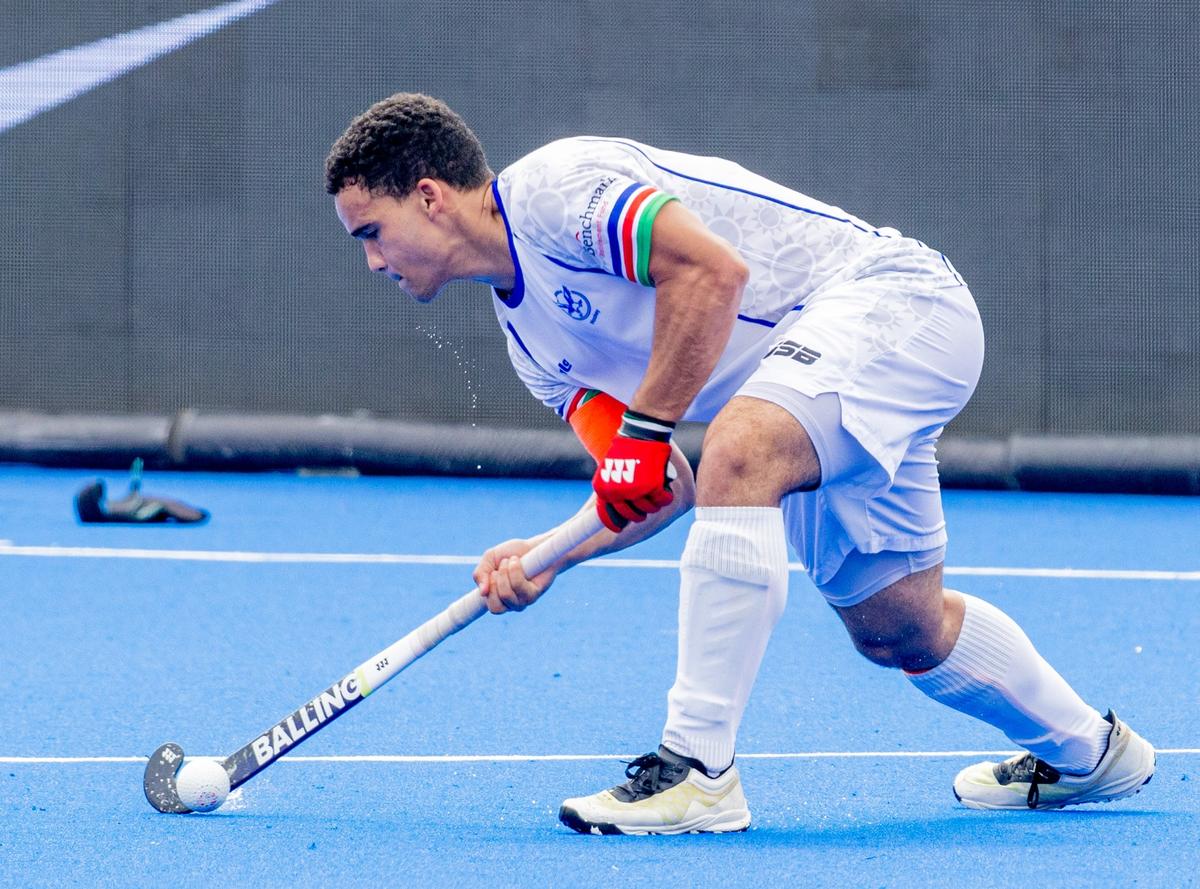
A once-in-a-lifetime performance saw Namibia beat everyone bar South Africa to book their tickets to the World Cup.
| Photo Credit:
Special Arrangement

A once-in-a-lifetime performance saw Namibia beat everyone bar South Africa to book their tickets to the World Cup.
| Photo Credit:
Special Arrangement
“We ended up beating Kenya, Zimbabwe and Zambia. I can say we definitely deserve to be here,” he asserted.
“We had never beaten Egypt in our history. We beat them in the first game. I think that was such a boost to the players that they realised, ‘We can do it’. Zimbabwe, too, always beat us. We managed to beat them as well. We were doing something right, and it worked,” head coach Johann Weyhe echoed.
Stumbling blocks
History had been made. A spot at the Junior World Cup had been booked. But Namibia’s real test was in preparing for the tournament.
“That was quite difficult. Some of the players are at university in South Africa. We only had nine out of 18 players in Windhoek to practice. We had to send them all the information and what they needed to do, and so on. One of our players stays in Ireland,” the coach said.
“Maybe it’s going to be a shock to the world, but we’ve only got five clubs in the entire [of] Namibia. Out of those five clubs, we had to select Under-21 sides. And with that side, we went through AFCON as well as playing in the World Cup,” he added.
Many of Namibia’s players, including skipper Britz, come from an indoor hockey background. The side is ranked eighth in the world in the indoor variant and has been part of three World Cups, finishing eighth in the most recent iteration.
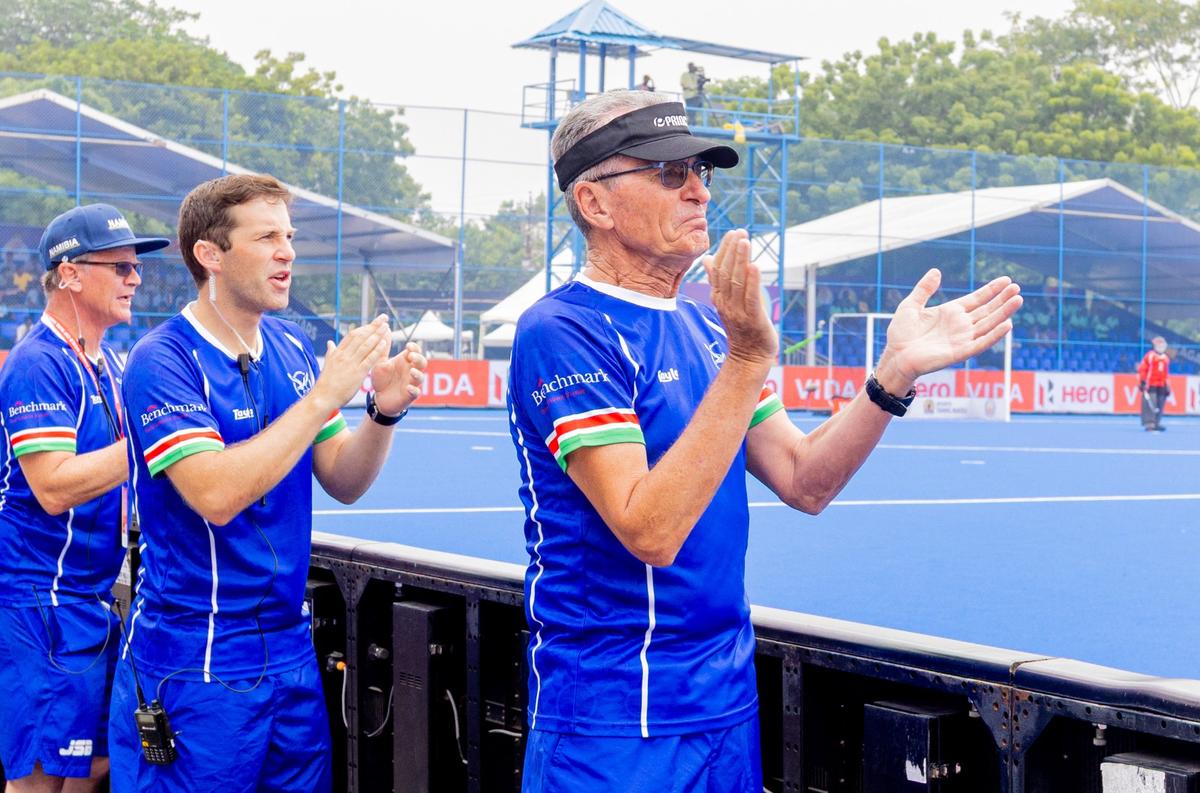
Namibia is ranked eighth in the world in the indoor variant and has been part of three World Cups, finishing eighth in the most recent iteration.
| Photo Credit:
Special Arrangement
Namibia is ranked eighth in the world in the indoor variant and has been part of three World Cups, finishing eighth in the most recent iteration.
| Photo Credit:
Special Arrangement
“We haven’t got the numbers to play different sets of players for both [field and indoor]. But what I like as the national coach is that the skills of indoor hockey can be utilised in field hockey as well. It helps us with the stick work and stuff,” Wehye explained.
“The field in indoor hockey is a lot smaller,” Britz outlined. “The ball is not allowed to lift off the ground. In outdoor, you can overhead, hit, slap, and also reverse-hit. I like outdoor more, but I’m better at indoor,” the team’s top scorer at the Indoor World Cup 2025 in Croatia, added.
Skipper Britz is all of 21, but is already focussed on laying a pathway for future generations of Namibian field hockey players.
“We have a leadership group. Our job is to build a culture so that when these guys become senior, the culture doesn’t change. If the foundation is solid, then it builds up to the national men’s side,” he said.
Things may not have gone to plan in Madurai. But a course has been charted for young Namibians to replicate, if not surpass, what these pioneers have accomplished.
Published on Dec 07, 2025