

Madurai facelift for Junior World Cup provides hockey hopefuls platform to dream
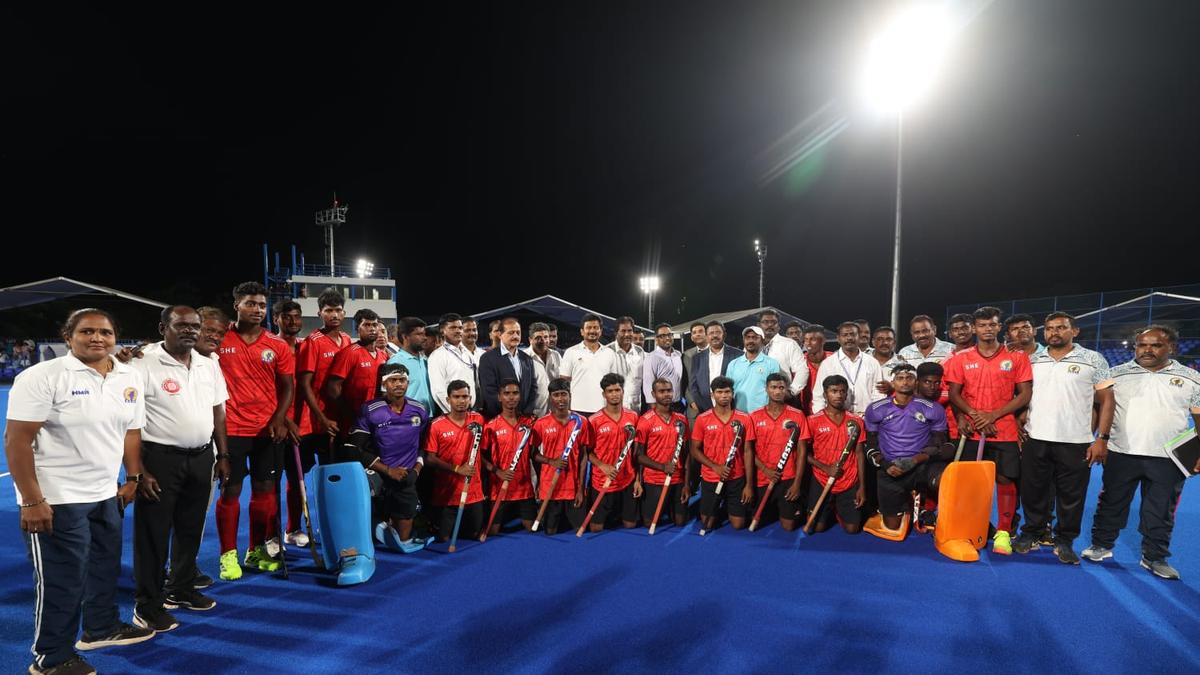
The southern districts of Tamil Nadu have long been the cradle of hockey players in the state. The Sports Hostel of Excellence (SHE) in Kovilpatti, and the districts of Madurai and Ramanathapuram have contributed more than ten players to the State hockey team every year since 2019.
However, the State capital, Chennai, enjoyed a monopoly on hosting international fixtures. The FIH Junior Men’s World Cup 2025 bucked the trend, with three Pool fixtures and the lower-end classification matches scheduled in Madurai, the cultural capital.
While hordes of schoolchildren and a spattering of passionate hockey lovers were in attendance throughout the tournament at the Madurai International Hockey Stadium, the real beneficiaries were the few hundred athletes masquerading as volunteers, hoping one day they too could wield their sticks for their country on the global stage.
READ | The bigger picture: How Namibia’s Junior Men’s World Cup dream is just the beginning
These future hockey hopefuls are part of the Sports Development Authority of Tamil Nadu’s (SDAT) sports hostels and academies spread across the state. Hosting the World Cup on their soil has helped them undertake a free crash course in top-level field hockey.
“Madurai is a nursery for hockey in Tamil Nadu. The younger generation is getting inspiration from [the home World Cup]. They are watching all these stars, future stars, right in front of their eyes. They will understand the standard of hockey at the international level right now,” Indian junior men’s team head coach, P.R. Sreejesh, told reporters ahead of India’s league stage encounter against Switzerland, its only contest in the temple town.
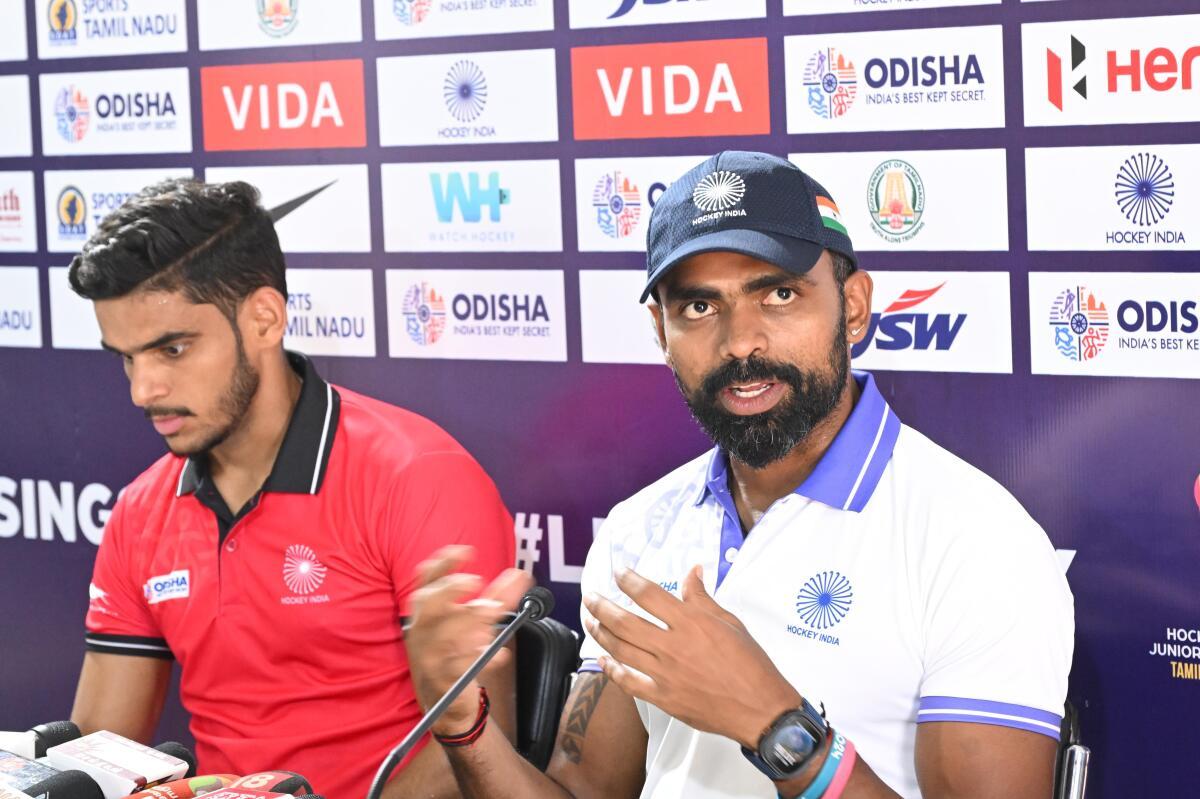
Junior Indian hockey team coach PR Sreejesh believes the improved facilities in Madurai will help the players in southern Tamil Nadu to chart a professional route in the sport.
| Photo Credit:
G. Moorthy

Junior Indian hockey team coach PR Sreejesh believes the improved facilities in Madurai will help the players in southern Tamil Nadu to chart a professional route in the sport.
| Photo Credit:
G. Moorthy
“Madurai. Kovilpatti. These are areas where there are a lot of talented youngsters who play this game for fun, but they never imagine anything beyond that. There is a professional route. You can be part of the national team. You can think about the Olympics. When you are witnessing these tournaments in front of your eyes, you start to build up dreams,” the double Olympic bronze medallist added.
A lesson like no other
Take the examples of A. Hari Balaji, S. Karthikeyan and S. P. Aravind, aged 17 to 18. The three friends had got together to join the Ellis Nagar Academy during the COVID-19 pandemic. From playing hockey to kill time and reduce weight, the trio are now witnessing the highest standard of hockey in the age group just above them, with a realistic chance of getting there in three-four years.
“Teams here are very quick with their reactions. They want to stop the opponent immediately. They are a lot more aggressive. Their physicality is so much better than ours,” Aravind said, explaining how different international junior hockey was in comparison to their level. “Even their push feels like a slap,” Hari Balaji added.
“Irrespective of what we teach on the ground, players will understand a lot more when they watch and learn,” said N. Muthukumar, a hockey coach at the SDAT SHE in Kovilpatti. “How players in each position play, how they keep the ball. There is an opportunity for them to improve individually.”
The SHE was created to ensure a steady passage of hockey players from Tamil Nadu into the Indian hockey team. Selvam Karthi made the step to the national side after sharpening his skills in the centre. Three more players, Arun, Manimaran and Vishal, have now been called up for a national team camp in Bengaluru, according to Muthukumar. An event of this calibre will only ensure that more players will manifest tracing the same path in future.
A few members of the SDAT Madurai and Kovilpatti hostels also participated in a warm-up match against Malaysia on the eve of the tournament start. After holding the international team to 2-2 at the half-time break, the hostellers eventually went down 2-4.
“As a forward, I noticed that they do a lot more skills. They are much quicker than we are and progress the ball a lot faster,” said S. Anbuchelvan, recounting his experience from participating in the game.
The younger kids from the Ellis Nagar Academy also got a taste of the action, serving as ball patrol during the competition. Around 60 students have enrolled at the academy, out of whom 30 are under the Khelo India bracket. From the current batch, two members have represented the State in age-group tournaments, while eight have represented Madurai in inter-district tournaments.
Infrastructure boost, but is that enough?
The refurbished Madurai stadium now has a world-class astroturf in place of the earlier green turf, which the boys at the SDAT hostel can now use for their training. The quality of the pitch was always something the players had to adjust to when they went to other parts of the country to play in School Games Federation of India (SGFI) tournaments or the junior nationals.
“After practising on gravel grounds, it’s difficult to adjust to astroturf. The ball bounce is a lot truer in astroturf, and that will help us develop [our] skills. The ball is easier to lift and move around quickly. If you ask regular gravel players to play on astroturf, their game will immediately get better,” Karthikeyan said.
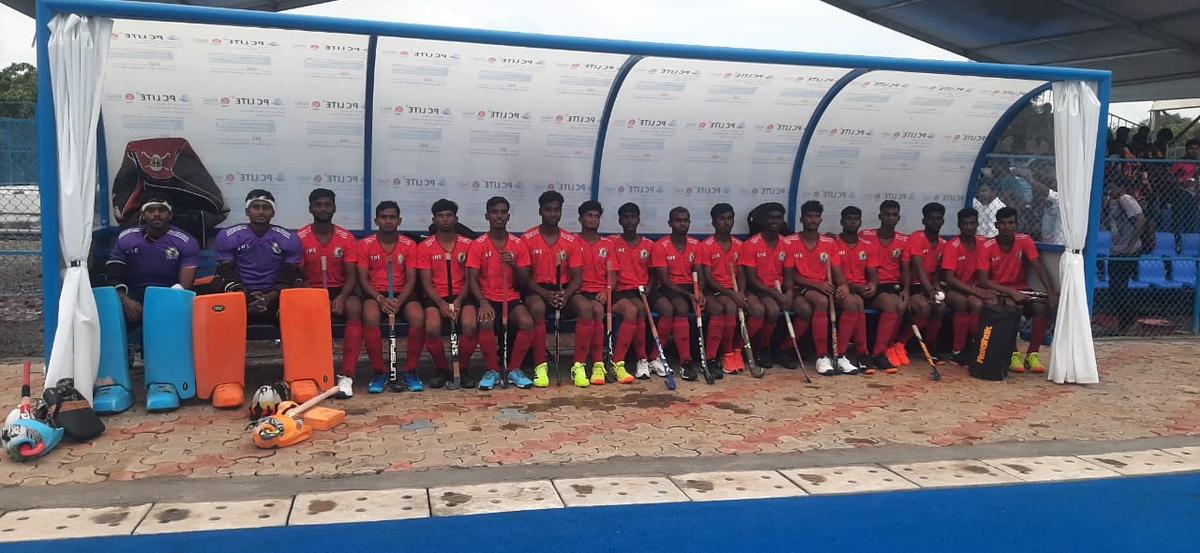
Players from the SDAT Sports Hostel of Excellence.
| Photo Credit:
SPECIAL ARRANGEMENT
Players from the SDAT Sports Hostel of Excellence.
| Photo Credit:
SPECIAL ARRANGEMENT
“When we go to other parts of the country, they always say Madurai players don’t have style because they are gravel-based players. If they are allowed to play on the same turf as others, they will also be able to improve their game,” his colleague Aravind added.
P. Ramadoss, a former Tamil Nadu player hailing from Madurai, who now coaches at the Ellis Nagar academy, also welcomed the development, but added that the players still have a long way to go to be able to perform at the highest level.
“This is a big opportunity for the boys. We never saw turfs while growing up. It was always muddy grounds. The current generation is able to watch the World Cup. But people in foreign countries are doing well because they start at 11-12 years old, with a proper diet. We are starting only after 14 and 15,” he said.
“The sport is expensive. To play on astroturf, we need a stick worth Rs. 5000. The only goalkeeper kit we have, worth around Rs. 50,000, was sponsored by the government. So it is quite a burden on the family,” he added.
Only players selected for SDAT hostels or the Khelo India programme have all their equipment needs taken care of, including jerseys, sticks, protective pads and so on. The hostels also provide them with a nutritious diet throughout their stay. For those outside the periphery of these structures, the game remains costly.
Witnessing the World Cup at home and enjoying its benefits is only one slice of the pie. Continued systemic support and regular tussles with teams higher up the ladder will help these youngsters blossom into India’s next hockey superstars.
Published on Dec 09, 2025